
Four Score and Seven Website Reviews:
"To understand the true character of a man, one must look at the whole of his days—the trials he endured, the humble cabins he built, and the laughter that carried him through the storm. Presidents aren’t shaped in the White House. They’re shaped by what they see, where they travel, and the currents they move through. I highly resolve that these reviews shall not perish from the earth, for I reckon they will bring a chuckle to your soul, spark your curiosity, and leave your mind a bit wiser." 🎩🧔🏻♂️
Works published before January 1, 1931, are in the public domain in the United States. 🇺🇸
1.) ★★★★★
"Finally, an Honest Abe who doesn't take three years to get to the point! Didn't ask me for a single troop count. God gave us Lincoln and Liberty, let us fight for them both. Best Lincoln impersonation I've seen. Almost as good as the real thing. 5 out of 5 stars."
Review by: U.S. Grant
* Grant admired Lincoln, calling him, "The greatest man I have ever known," in his memoirs. In 1862 President Lincoln said of Grant, "I can't spare this man. He fights." Lincoln summarized their bond beautifully later in the war, saying: "He doesn't worry and bother me. He isn't shrieking for reinforcements all the time."

2.) ★★★★★★★★★★🧤🧤🧤🧤🧤
"Finally, someone who doesn't talk about my shopping habits and actually frames my husband beautifully beneath that enormous stovepipe hat. However, he better add some pictures of me or I'm ordering 400 new pairs of gloves on his tab. I bestow 10 stars upon you! Please charge these 5 pairs of digital kid-skin gloves to Mr. Lincoln’s account immediately."
Review by: Mary Lincoln
* Considered by historians to have been a compulsive shopper. Mary ordered a massive amount of gloves—often cited as 300 to 400 pairs—over a four-month period during the Civil War. She racked up massive debt through these purchases. Critics called them frivolous, and some reports say she hid the costs by secretly billing the government.
** After marrying Lincoln on November 4, 1842, she dropped "Todd" from her name and never used it, signing her name as Mary Lincoln, Mrs. A. Lincoln, or Mrs. Abraham Lincoln. While commonly referred to today as Mary Todd Lincoln, she never referred to herself that way, considering herself simply Mary Lincoln for the rest of her life. Abraham affectionately used the nickname "Molly" for his wife, as a private pet name during their marriage.
*** Kid skin gloves were a luxurious 19th-century fashion accessory made from the extremely soft, thin leather of young goats (kids) or lambs. Highly prized for their elasticity and second-skin fit, they were a mandatory social item. Because the delicate leather stained easily and wasn't laundered, they were frequently discarded and replaced. Mary absolutely loved gloves and was a collector.

3.) ☆☆☆☆☆👎
"I see you’ve managed to dress up a baboon in a frock coat and put him on the wireless. That tall, awkward Yankee impersonated? Lord have mercy, one was already too many! He clearly took his historical material way too literally. He spent the night loudly whispering 'a house divided cannot stand' every time my wife and I had a minor disagreement. Absolute dictator. Would not recommend. 0 stars and a very firm thumbs down."
Review by: Jeff Davis
* President of the Confederacy. Opposed Lincoln because he threatened the survival of slavery and the political power of Southern slaveholders. After fleeing the Confederate capital and being captured in Georgia in 1865, Davis was imprisoned for two years. He was released on bail in 1867 and lived out the rest of his life in retirement, writing memoirs and working in business.
** Jefferson Davis did not specifically say "baboon," but as President of the Confederacy, his administration and the Southern press routinely dehumanized Lincoln as an ape or gorilla. McClellan, not Davis, famously criticized Lincoln in private letters, once calling him "nothing more than a well-meaning baboon".

4.) ★★★★☆🔥🔥
"I've seen this fella online. It's a damn good website. These web-critics are just spies in fancy digital clothes. I hate them! If I killed them all, we'd be getting reports from Hell before breakfast about how hot the flames were! And yes, I want the double fire emoji, whatever the hell that means! 4 out of 5 stars!"
Review by: W.T. Sherman
* During his "March to the Sea," General William Tecumseh Sherman enacted a brutal "total war" strategy. Sherman utilized a "scorched earth" strategy during his 1864 March to the Sea. His troops deliberately burned infrastructure—such as railroads, factories, and warehouses—along a 60-mile-wide strip to destroy the Confederacy's capacity to wage war and to break civilian morale.

5.) ★★★★☆
"I must say, I haven't seen the Tycoon this lively since he was reciting Shakespeare in his nightshirt at 3:00 AM. The physical resemblance is uncanny, though you seem far too well-rested to truly be him. A bit more melancholy in the eyes would make it perfect. If you require a secretary who can write a 10-volume biography in his spare time, do let me know. It is, in my view, a solid 4 star performance."
Review by: Hay
* John Hay, one of Abraham Lincoln's private secretaries, frequently referred to him as "the Tycoon" in his diaries and letters. Hay, along with fellow secretary John G. Nicolay, used the term affectionately and respectfully. When they began their roles in President Lincoln's administration in 1860, Nicolay was 28 years old, and Hay was just 22 years old.
** Hay was a talented author and poet. Hay co-authored a 10-volume biography of Lincoln titled, "Abraham Lincoln: A History." He wrote it alongside Nicolay. Hay served as Secretary of State under Presidents McKinley and Theodore Roosevelt.

6.) ★★★(★½)☆⚖️
"Sir, I have pursued your digital tableau dedicated to Mr. Lincoln. It possesses the necessary eloquence. Much like the original Lincoln, this impersonator listened to my entire three-hour speech on human rights and responded with a message that could have fit into a modern text message. A truly authentic experience! You have presented the 'white man's President' well, but it could use more of the 'radical' spirit that forced him to end slavery. 3.5 out of 5 stars. I bestow this balance scale emoji to signify justice."
Review by: Frederick Douglass
* Lincoln and abolitionist Douglass developed a respectful, evolving partnership, moving from harsh criticism to a deep mutual respect and friendship after Douglass became a trusted advisor to Lincoln.

7.) ☆☆☆☆☆👎
"I do not approve of this 'World Wide Web' business, it sounds like a Yankee fishing net. You have focused all your 'tactics' on flash and color, but I see no fortified, defensible, or, frankly, Christian content. Now if you'll excuse me, I must eat a lemon and I must return to my prayers. I give your website 0 stars and a downward thumb. I recommend that the 'enemy impersonator' be hotly pursued and removed from the search engines immediately."
Review by: Theos. J. Jackson
* While often exaggerated into a major legend, it is historically accurate that General "Stonewall" Jackson occasionally ate lemons to alleviate digestive issues.
** Thomas Jonathan Jackson was exceptionally religious, embodying a strict, devout Calvinist Presbyterian faith that guided every aspect of his life. His piety was described as "inflexible and total," characterized by constant prayer, meticulous Sabbath observance, and a belief that he was an instrument of God's will, even in battle. Jackson was accidentally shot and mortally wounded by his own men.

8.) ★☆☆☆☆⏱️
"This evaluation requires the utmost caution, so I am utilizing this stopwatch emoji to carefully measure the extensive delays needed before rendering a final judgment. It is a well-ordered site—but I'll need another six months to properly review it before I can recommend a visit. You should wait until you receive another 50,000 visitors, a new webmaster, and new photos, before launching the show. Perhaps we should wait to hear what the rebels think of it first. A good show requires patience! I am only giving 1 star because the fonts are nicely organized."
Review by: George B. McClellan
* Lincoln grew deeply frustrated with General McClellan primarily because of his extreme caution, reluctance to attack, and failure to pursue Confederate forces, most notably after the Battle of Antietam. McClellan often overestimated enemy strength and stalled, leading Lincoln to feel he was wasting opportunities to win the war. President Lincoln famously captured his frustration with his army's sluggishness by writing, "He has got the 'slows'," referring to General McClellan. McClellan ran for president against the incumbent Abraham Lincoln in 1864, and McClellan ultimately lost the election.

9.) ☆☆☆☆☆👎🗡
"A Web of Tyranny! This website is a monument to a dictator! Traitorous content! The performer lacks the dramatic flair needed to embody such a monstrous figure. 0 out of 5 stars and thumb down! I bestow upon you this virtual blade emoji, a sharp steel token to pierce through their falsehoods! 'Sic Semper Tyrannis!'"
Review by: Brutus
* John Wilkes Booth viewed himself as a modern-day Marcus Junius Brutus—the righteous assassin of Julius Caesar—believing he was saving his country by killing a "tyrant."

10.) ★★(★½)☆☆🛤
"Look, Master Lincoln, I appreciate the fancy 'Proclamation' speech, truely. You talk a big game about 'freedom' while paying my soldiers $7 and the white boys $15? Seriously, they put you on the penny because you're tight with a buck, aren't you? With a single lantern guiding the Union gunboats up the Combahee, I brought 700 souls out of bondage to the promise of freedom. Because of my many dangerous journeys leading the Underground Railroad, I hereby award you this railroad track emoji to remind you of the real miles I covered while you stayed in Washington. The site is fine, but it's mostly just fancy digital ink. I'm giving it 1/2 a star for the thought, and 2 stars, cause well...you got it done."
Review by: Harriet Tubman
* Harriet Tubman was first announced to replace Andrew Jackson on the front of the $20 bill in April 2016 under the Obama administration, with the design originally scheduled to be unveiled in 2020. The redesign stalled after the incoming Trump administration prioritized, then delayed, the process due to anti-counterfeiting security requirements, later shifting the anticipated, redesigned note to 2028 or later. The Treasury Department currently cites 2030 target date.

11.) ★☆☆☆☆🕵♂️
"Excellent stovepipe hat, but I’d give it 1 star and assign you a detective emoji, because you were completely unprotected in Baltimore. You stood on that stage bragging about being the Great Emancipator, yet you didn’t change into a disguise or sneak through a single train car at 3 a.m. I have dispatched three agents to shadow your webpage. Needs more espionage!"
Review by: Allan Pinkerton
* Allan Pinkerton was a Scottish-American detective who founded the famed Pinkerton National Detective Agency in 1850. A staunch abolitionist and former Chicago deputy sheriff, he is most celebrated for thwarting an assassination plot against Abraham Lincoln in 1861 and later providing crucial military intelligence during the American Civil War.


12.) ★☆☆☆☆👇
"I have reviewed the website of this...Gentleman. I must say, it is almost as exhausting to read as it was fighting in the Wilderness. Impressive dedication to a lost cause...well, my lost cause. It seems designed to provoke, lacking the quiet dignity of a true Virginian. Nevertheless, I am a man of peace, so I will give you 1 star and a sideways thumb that is rapidly pointing towards Washington."
Review by: R.E. Lee
* Early in 1861, Lincoln offered Lee command of the Union Army, which Lee respected but declined, citing his duty to Virginia. Following his surrender at Appomattox, Lee viewed Lincoln as the best hope for the country. Lee was deeply saddened by Lincoln's death and called the president's assassination a "deplorable crime."

13.) 🎩🎩🎩🎩🎩🎩🎩🎩🎩🎩
"Greetings Mr. President,
It’s your favorite constituent, Grace! I just had to stop by and leave a review for your website. As I’ve always said, all the ladies like whiskers, and they will absolutely tease their husbands to vote for you! Speaking of those whiskers, I have to confess something: I occasionally flaunt a pullover beard myself, and your site has given me some truly fantastic grooming inspiration. Between your website design and your majestic facial hair, how could any husband resist casting his ballot for you? 10 out of 10 stovepipe hat emojis! Your very sincere well-wisher,"
Review by: Grace
"Please write to me very soon."
* In 1860, 11-year-old Grace Bedell wrote to presidential candidate Lincoln, suggesting that a beard would make him look more distinguished and help win over votes. Lincoln took her advice and grew his iconic whiskers. In 1861, while traveling to his inauguration, his train stopped in her town of Westfield, New York, where he stepped down to meet her and proudly showed off his new beard.


Lincoln-Bedell Statue Park in Westfield, New York. This image or media file contains material based on a work of a National Park Service employee, created as part of that person's official duties. As a work of the U.S. federal government, such work is in the public domain in the United States. 🇺🇸
14.) 🗣🗣☆☆☆☆☆
"I must say, this website lacks a bit of 5-foot-4-inch flair. It's a respectful presentation, perhaps even for a Whig! Not enough mention of Kansas-Nebraska Act. Lots of 'House Divided' and not enough 'Popular Sovereignty.' Frankly, needs more 'Little Giant' energy. I'll give this website 2 out of 7 debates-specifically, Ottawa and Freeport- because that's all I actually need to win. Keep trying Abe."
Review by: Stephen A. Douglas
* Although Lincoln lost the 1858 Senate race, the Lincoln-Douglas debates elevated him from a regional politician to a national figure by showcasing his eloquence and firm anti-slavery stance to a widespread audience. The debates forced him to sharpen his arguments against popular sovereignty, strengthening his reputation within the young Republican Party. Furthermore, by forcing Douglas to adopt the "Freeport Doctrine" to survive the debates, Lincoln divided the Democratic Party, which hindered Douglas’s 1860 presidential prospects and paved the way for Lincoln's success. Lincoln forced Douglas to choose between the Supreme Court's pro-slavery Dred Scott ruling and Douglas's own concept of "popular sovereignty." By choosing local rule, Douglas won his 1858 Illinois Senate seat against Lincoln, but he deeply angered the South.
** The "Little Giant" Stephen Douglas was born with two "s"s (spelling his name "Douglass") and later changed it to one "s" ("Douglas"). There is popular myth that he changed it not to be confused with famous abolitionist Frederick Douglass. However, he dropped the second "s" before he reached the height of his fame, and likely before Frederick Douglass was widely known as a national figure.

15.) ★★★★☆🧹
"Extremely convincing work! I spent the war acting like I couldn't read while cleaning Jefferson Davis's desk, so I know a great performance when I see one. I'm docking 1 star because I didn't see any photos of you memorizing top-secret war documents while dusting. Keep up the great work—and for heaven's sake, if a lady in a bonnet starts asking questions, don't tell her anything! It’s a good, solid 4 stars from me—very near perfection—which is why I am awarding you this broom emoji to honor your sweeping success."
Review by: Mary Jane Richards Denman (aka Mary Bower)
* Mary Bowser was a brilliant Union spy placed in the heart of the Confederacy in Richmond, VA. While pretending to be an unintelligent domestic servant to the Confederate President, she used her photographic memory to read confidential papers and report troop movements to the North. She was inducted into the Military Intelligence Hall of Fame in 1995.

Image of Mary Jane Richards generated using Perplexity AI (2026)
16.) ★★★★☆🎶
"I give you 4 stars and a beautiful music emoji! As a woman who escaped slavery, made my way to Washington, and proudly directed the Contraband camp choir—which the real President actually visited—I must say your top hat looks splendid. However, you look far too healthy. The real Mr. Lincoln notoriously forgot to eat. When he did remember to chew, his absolute favorites were chicken fricassee with biscuits and oyster stew. The man also ran on pure sugar, specifically apples, apple pie, and gingerbread cookies. I watched you eat an entire modern buffet before your performance! The real Abe would have been full after a single egg, one biscuit, and a cup of black coffee. Still, you have the look, and you didn’t cry once during the choir performance, which is a massive improvement on his usual weeping."
Review by: Mary Dines
* Mary Dines was an escaped enslaved woman who found freedom at Camp Barker, a "contraband camp" for formerly enslaved refugees in Washington, D.C. Affectionately known as "Aunt Mary" by the Lincolns, she briefly worked as a private cook at the President's summer residence, the President Lincoln's Cottage, and briefly in the White House. She was well-known for her beautiful singing voice. During his commutes to and from his summer retreat, Lincoln would often stop by her camp to listen to her choir sing spirituals—a tradition that brought him to tears. Beyond her cooking and musical talents, Dines actively nursed the Lincoln children when they fell ill and wrote letters to help displaced slaves reconnect with their families.
** Lincoln frequently considered eating to be an inconvenience, often skipping meals or forgetting to eat entirely unless his staff or wife intervened to force a tray of food upon him.
*** Contraband camps were refugee settlements established by the Union Army to house hundreds of thousands of enslaved people who had escaped or been liberated. The term originated in 1861 when Union General Benjamin Butler classified runaway slaves as "contraband of war" to avoid legally returning them to Confederate owners. These camps rapidly evolved into self-sustaining communities where formerly enslaved people built homes, started schools, and established churches. They also provided vital labor for the military, and many residents eventually enlisted in the United States Colored Troops.

17.) ★★★★★🇺🇲🇺🇸
"A magnificent portrayal, indeed! The oratorical prowess is almost as captivating as my own speech to the 20th Maine. You hold your audience with a commanding, yet honest simplicity that reminds me deeply of the Great Emancipator himself. However, I noticed you lacked a solid plan for a bayonet charge—I recommend adding a 'Services' section to the website. Still, this performance will surely bring a 'new birth of freedom' to local events. I am compelled to accord it the highest honor possible—5 stars and 2 banners of freedom emojis."
Review by: Joshua L. Chamberlain
* Colonel Chamberlain led the 20th Maine Regiment in a desperate and decisive bayonet charge down the slope of Little Round Top at Gettysburg. With his men nearly out of ammunition and suffering heavy casualties, Chamberlain ordered them to "fix bayonets" and initiate a right-wheel maneuver, turning a defensive stand into a sudden, shocking counterattack. Chamberlain was awarded the Medal of Honor and became known as the "Lion of the Round Top."
** Chamberlain was highly regarded for his exceptional prose. Before the Civil War, he was a professor of rhetoric and modern languages at Bowdoin College, a background that heavily influenced his writing and speaking style. Chamberlain and 19th-century orators frequently used "banner" instead of "flag" when speaking formally or poetically.

18.) ★★★★☆
"It's a marvelous performance...but I wouldn't recommend taking the whole division to see it. A loving portrait of an old friend, albeit a Yankee one. While I was studying law in Illinois, that great hearted man, who was a Congressman and a friend of my uncle, took notice of my secret ambition to become a soldier, and he personally secured my appointment to West Pont. Although I went on to lead the grey and him the blue, I knew him as a friend who cherished a boyhood dream of mine. I cannot give 5 stars to a Yankee President, for my heart still belongs to the Lost Cause, and I still feel the sting of that bloody field where my men fell like autumn leaves. 4 out of 5 stars! Your obedient servent,"
Review by: George E. Pickett
* Confederate Major General George Pickett is remembered as a mediocre military commander whose entire legacy rests on a single historic moment: leading his division into the disastrous frontal assault known as "Pickett's Charge" at Gettysburg. During the Battle of Gettysburg, Pickett led his fresh division of roughly 6,000 men in a disastrous frontal assault against entrenched Union positions on Cemetery Ridge. The charge decimated his ranks, resulting in over 40% casualties—over 2,600 men killed, wounded, or captured—effectively destroying his division as a functional fighting force. When ordered by Lee to rally his division for a counterattack afterward, an inconsolable Pickett famously replied, "General Lee, I have no division." He reportedly never forgave Lee for ordering the doomed infantry assault, eventually dying of a liver abscess on July 30, 1875.

19.) ★★★★★🌧📖
"Highly recommended! He ruined my book, confessed immediately, and then spent three days doing manual labor on my farm to pay for it. Honestly, it was the cheapest farm labor I've ever hired. 5 stars, and a rain with book emoji! I tried to blow the dust off the tiny screen, but the little book stayed there. Please come back and ruin another book, my corn has never looked so good."
Review by: Josiah Crawford
* Josiah Crawford was an early neighbor of Abraham Lincoln in Spencer County, Indiana. He is best remembered in history for loaning a young Lincoln, David Ramsay's biography of "George Washington titled, The Life of George Washington." When the book was ruined by rain, Crawford demanded that Lincoln pay for the damage by doing three days of hard labor in the fields. This early episode perfectly demonstrates his famous lifelong commitment to integrity. Rather than hide the damaged book or deny responsibility, he immediately confessed to the accident and took full accountability.

Illustration from, The Story of Young Abraham Lincoln, 1915 - public domain
20.) ★★★★★🪙
"I hired this 22-year-old lad back in 1831 to clerk at my general store in New Salem, Illinois. Talk about trustworthy—the boy actually walked several miles into the woods just to return six cents to a woman he accidentally overcharged! He is so brutally honest that he completely ruined my reputation as a legendary exaggerator—and trust me, I once wrestled a full-grown grizzly bear with one hand while successfully selling a broken clock to a blind man with the other! 5 out of 5 stars and a coin emoji for a clerk who is way too good for my failing business!"
- Denton Offutt
* In 1831, a 22-year-old Abraham Lincoln moved to New Salem, Illinois, and worked as a clerk in a general store owned by Denton Offutt. This store was only open for roughly nine months; Offutt was an impulsive businessman whose mounting debts forced the store to close in the spring of 1832. Immediately following this closure, Lincoln left to serve as a captain in the Black Hawk War—a conflict between Native Americans and settlers over lands in Illinois.
** While working as a clerk at a general store in New Salem, a young Lincoln realized he had accidentally overcharged a customer. True to his unwavering integrity, he closed up the shop and walked several miles to the woman's home to return the spare change, cementing his legendary nickname, "Honest Abe."

Statue of "Young Lincoln" first displayed-published 1945. Now in Senn Park, Edgewater Chicago. Public domain.
21.) ★★★★★🏪
"As his former shop and tavern partner, I can confidently say this impersonator is much better at running a business than the actual Lincoln was at stopping me from drinking our entire inventory while he sat in the corner reading law books. He deserves a perfect 5 out of 5 stars—and yes, that is a shop emoji. If only I had spent as much time managing the inventory as Lincoln did reading, I wouldn't have drunk us into a financial ruin so massive it took poor, honest Abe, twelve whole years of hard work to finally pay off my bar tab."
Review by: William F. Berry
* Abraham Lincoln and William F. Berry's venture in New Salem, Illinois, is a legendary disaster. Evolving from a general store into a licensed tavern, the business failed because partner William Berry allegedly drank much of the inventory. The shop failed in the 1830s, leaving Lincoln with roughly $1,000 of debt (a massive sum at the time). When his business partner, Berry, died in 1835, Lincoln absorbed the entirety of the financial burden. It took Lincoln 12 to 17 years to fully pay off the debt from his failed general store partnership.

Postcard labeled: Berry and Lincoln store, stock bought of Greene Jan. 1833, Lincoln's New Salem, Illinois. Public domain.
22.) ★☆☆☆☆👎
"This guy looks exactly like my boy—a total waste of good muscles because he'd rather read books than do heavy farming. I don't even know how I'm typing this online since I can't read or write, but I'm mad enough to figure it out. Abe handed over his whole paycheck, but this impersonator tried to hand me a single penny! Thumbs down and 1 star."
Review by: Thomas Lincoln
* Thomas Lincoln was a hardworking frontier carpenter and farmer. Though often misunderstood by historians as an uneducated failure, he was actually a well-respected, honest, and good-natured community member. However, he had a strained relationship with Abraham, routinely renting his young son out to neighbors for manual labor and pocketing his wages. Abraham once stated, "I used to be a slave," adding that he only felt truly free once he was allowed to practice law. Thomas struggled to understand Abraham's bookish nature, valuing physical labor over reading. Their fractured relationship never mended, remaining distant and strained for the rest of their lives.
** Thomas Lincoln never learned to read or write, though he was occasionally able to sign his own name. Because he was functionally illiterate, it is historically believed that he could only write his name by carefully copying or tracing the letters.

23.) ★★★★★👩🍼🏐
"My time on Earth was cut far too short, and it broke my heart to leave my dear Abe when he was only a 9-year-old boy. Yet, watching this gentleman perform felt like a message from beyond the veil. He captures the very spirit of the tall, thoughtful man, I always knew my boy would grow up to be. He honors our family's humble frontier beginnings with such dignity. I must say, his performance is so moving that it rivals my other, much later cousin, Tom Hanks—though I do wish Tommy would stop getting stranded on islands and talking to volleyballs. 5 stars and a mother rocking her baby emoji. A volleyball emoji for Tommy!"
Review by: Nancy Hanks Lincoln
* Nancy Hanks Lincoln was the loving and resilient mother of Abraham Lincoln. She nurtured her son's early intellectual curiosity and instilled strong moral values in him despite the harsh realities of the frontier. She died on October 5, 1818, after contracting milk sickness—a fatal condition caused by consuming dairy from cows that had ingested the poisonous white snakeroot plant. At the time of her tragic passing, Nancy was 34 years old, and her son Abraham was just 9 years old.
** Although no documents with her autograph are known to exist, historians generally agree, contrary to some myths, she was not illiterate. She was known to be an avid reader and an intelligent woman who could read the Bible and write well enough to teach her future husband, Thomas, how to write his own name so he could sign their wedding certificate.
*** Through her Hanks bloodline, Nancy Hanks is the distant cousin of Academy Award-winning actor Tom Hanks. Specifically, genealogists classify the pair as third cousins, four times removed. This ancestral connection through Lincoln's mother inspired Tom Hanks to serve as a narrator and historical commentator for projects like the National Geographic documentary Killing Lincoln.

The grave of Nancy Hanks Lincoln, mother of President Lincoln. Public domain.
24.) ★★☆☆☆🧪
"I’ve spent thousands of days perfecting the portrait of our beloved 16th President, and I must say—your web design is quite confounding! I looked everywhere on your domain, yet you never once asked me to clamp the back of your neck into a rigid iron headrest to prevent blurring. What kind of photographic process is this?! I sat completely still for five minutes while browsing your site, and not once did a drop of hazardous collodion chemicals drip from your computer screen. You do not even offer a stereoscopic viewing option. I gave it 2 stars and a collodion chemicals emoji, but frankly, without a heavy wooden tripod and a massive magnesium flash, your impression leaves much to be desired. Please stand closer to the light and hold your breath until I remove the lens cap!"
Review by: Alex Gardner
* Alexander Gardner was a pioneering Scottish-American photographer best known for his iconic documentation of the American Civil War. Originally mentored by Mathew Brady, Gardner famously captured the grim aftermath of battles like Antietam, made frequent portraits of President Lincoln, and photographed the execution of the Lincoln assassination conspirators. Gardner took more pictures of Lincoln than any other photographer. He captured over 38 individual images of the President.

25.) ⚓️⚓️⚓️⚓️☆
"'Damn the torpedoes, full speed ahead!' He’s got the stovepipe hat, the brooding gaze, and a chin strap beard so majestic, I briefly considered lashing myself to his rigging just to watch him deliver the Emancipation Proclamation. Well done, my friend! Stars are meant for the heavens and the Army boys, but a website dedicated to the Great Emancipator deserves the iron grip of a heavy anchor. For a proper commanding officer of history, I award you 4 anchor emojis—no more, no less—to represent the four stars of my hard-won Admiral's rank. Now, keep your bow straight, and 'damn the torpedoes, full speed ahead!'"
Review by: D.G. Farragut
* Admiral David Farragut was an iconic Union naval commander who shaped the Civil War by capturing New Orleans in 1862 and leading a successful attack at Mobile Bay, where he famously declared, "Damn the torpedoes! Full speed ahead!" During the Battle of Mobile Bay, thick battle smoke made it impossible for Admiral Farragut to properly see the action, so he climbed the rigging of his flagship, the USS Hartford, and lashed himself to the mast to command his fleet without obstruction. When the lead ironclad struck a mine (then called torpedoes) and sank, the hesitant fleet stalled directly under heavy Confederate fire. To get the ships moving and break the blockade, Farragut ordered his vessel through the minefield while proclaiming his immortal line.

26.) ★★☆☆☆🥃
"Why does he get to act like Lincoln, when I did all the real hard work of Reconstruction? I’ve seen better acting at a Tennessee tailor shop, but I admire that you didn’t include Hannibal Hamlin anywhere on this site. Not enough mention of leniency towards former Confederates. And don't get me started on Congress—those drama queens tried to evict me from the White House over a minor HR dispute regarding my Secretary of War, but missed kicking me out by a single, glorious vote. 2 out of 5 stars—which is exactly how much respect the Radical Republicans gave me. I am going for a drink! I award this performance a whiskey glass emoji. However, I feel a sudden, terrible chill coming on. I must think of my health and keep the real vintage for myself. Good day, sir."
Review by: Andrew Johnson
* At his March 4, 1865, inauguration, Vice President Andrew Johnson was heavily intoxicated after consuming whiskey to treat a cold, delivering a rambling, incoherent speech that embarrassed the administration. Lincoln defended him, asserting, "I have known Andrew Johnson for many years. He made a slip the other day, but you need not be scared; Andy ain't a drunkard".
** For Johnson, tailoring wasn't just a past job; it was his identity and a point of immense pride. Even as President, he famously boasted that his coats always fit perfectly because he made them himself.

Harper's Weekly newspaper lampooned Johnson's reaction to the vote on his acquittal. Public domain.
27.) ★★★★★🦅🦅
"This honest fellow gives the finest address in Illinois! Spot-on, compelling, and not at all a contingent somebody. And mark my words, I'm not letting that drunkard Andrew Johnson get the best of him in this webreview thread. 5 stars and 2 noble birds of freedom emojis for the true Great Emancipator!"
Review by: Hannibal Hamlin
* Hannibal Hamlin served as Lincoln's first vice president and was a staunch abolitionist who left the Democratic Party in 1856 to help found the anti-slavery Republican Party. Hamlin famously called the Vice Presidency "a fifth wheel on a coach" and a "contingent somebody" because the 19th-century role was largely powerless, offering no real executive influence. The Ironic Twist: Lincoln dropped Hamlin from the 1864 re-election ticket in favor of Andrew Johnson to project national unity. Because Lincoln was assassinated, that choice made Johnson—not Hamlin—President.

28.) ★★★★★🏥
"Just as I once walked the battlefields of our wounded nation to bring comfort and aid, this site brings order and comfort to the chaos of history. In an age where the 'foulest blot' of our history is sometimes forgotten, this website stands firm in its duty to accuracy. It’s nearly as impressive as the time I finally convinced Mr. Lincoln to let me set up the Missing Soldiers Office. And believe me, getting that man to focus on anything besides the war was harder than finding a dry bandage in Virginia. I offer this work my highest sanction, 5 stars! I award this webpage a Red Cross emoji for its indispensable utility."
Review by: Clara Barton
* Known as the "Angel of the Battlefield" for her courageous nursing during the Civil War, Clara Barton established the Missing Soldiers Office after the war to help locate over 22,000 missing Union soldiers. She later founded the American Red Cross in 1881, serving as its first president for 23 years and expanding its mission to include disaster relief.

29.) ☆☆☆☆☆⚰️
"Not a bad likeness, but the beard is a bit too neat, and he didn't help me institutionalize my mother. Plus, you're missing the terrifying curse of being invited out with me, Robert Todd Lincoln. Needs more historical doom and gloom. I’ve purposely avoided presidential functions to stay away from guys like you, and now you’re haunting my screen, too. 0 stars! The only emoji suitable for this review is a coffin. Get out of the business!"
Review by: Robert T. Lincoln
* Robert Todd Lincoln was the eldest and only surviving child of Abraham and Mary to live into adulthood. Despite the towering shadow of his father, he carved out a highly successful and lucrative life. In 1875, Robert Todd Lincoln orchestrated a highly controversial, surprise insanity trial that resulted in a jury declaring his mother, Mary Todd Lincoln, legally insane. He had her involuntarily committed to an upscale private sanitarium. Robert was deeply alarmed by her erratic behavior and extravagant spending, fearing she would dissipate their inheritance or fall victim to financial scams. However, modern historians generally view his actions as a desperate, if misguided, attempt to protect his grieving mother—who was suffering from severe delusions—rather than a plot to steal her wealth. Mary Todd Lincoln was eventually declared legally sane in June 1876, which restored her freedom and her legal right to control and manage her own estate.
** The "curse" of Robert Todd Lincoln refers to the eerie coincidence of his proximity to three presidential assassinations. He rushed to his father's deathbed in 1865, stood mere feet from President James Garfield when he was shot in 1881, and was arriving in Buffalo to visit President William McKinley in 1901 when he was fatally wounded. Robert reportedly declined future invitations to presidential functions.

30.) ★★★★☆🪶
"Sir, your website is as impeccably tailored as one of my own full-dress uniforms—even I, 'Old Fuss and Feathers,' cannot find fault with it, 4 stars. I shall even append a feather emoji to this rating, symbolising my personal plume of approval. However, the performance was as authentic as a Mexican jailhouse lawyer—I’ve seen better acting from a cannonball. Your ‘homespun’ anecdotes make me wish I was back in 1812. Still, it’s better than having to deal with McClellan, ho."
Review by: Winfield Scott
* Winfield Scott was a towering figure in American military history, serving as a commanding general in the War of 1812, the American Indian Wars, and the Mexican–American War. Though he was 74 to 75 years old and physically frail at the beginning of the Civil War in 1861, unable to mount a horse, he developed the strategic Anaconda Plan to defeat the Confederacy before retiring. Despite his brilliant career, limitations included his elderly health, a prickly personality, and his initial inability to take the field.

31.) 🚂🚂🚂🚂🚂
"Your site connects the Union faster than Western Union's lightning wire. Your Abe impersonation is the true golden spike of the internet. It bridges the great cultural divide with limitless horsepower. From the golden shores of the Pacific, California proudly sustains this grand digital enterprise. I rate you 5 out of 5 iron emoji horses!"
Review by: Stephen J. Field
* On October 24, 1861, California Chief Justice Stephen J. Field sent the first coast-to-coast transcontinental telegram to President Abraham Lincoln. Sent to Washington D.C., the historic message marked the completion of the Western Union transcontinental telegraph line. Writing on behalf of California, Field used the historic transmission to pledge the West's absolute loyalty to the Union during the opening months of the Civil War. This demonstration of regional allegiance deeply impressed Lincoln, heavily influencing his decision to appoint Field to the U.S. Supreme Court less than two years later.

32.)★★★★★🛏
"I once shared a double bed with Abraham Lincoln for four years. Trust me, I know exactly what he sounded and looked like—and this ain't it, pal. A single digital cot emoji and 5 stars for pure comedic fiction!"
Review by: J.F. Speed
* Joshua Fry Speed was a Kentucky-born businessman who became Abraham Lincoln’s most trusted lifelong confidant. When an impoverished, deeply depressed Lincoln arrived in Springfield, Illinois, in 1837, Speed took pity on him, offering him credit for bedding and sharing his own upstairs apartment for free.

Portrait of Joshua Fry Speed, about 1842. Historical Society • Public domain
33.) ★★☆☆☆🦆
"I’ve always said Mr. Lincoln was an odd duck, but he somehow looked much more polished than this. The wig is a tragedy and the folksy anecdotes are a snooze. However, my younger sister Mary would have absolutely eaten this up. If you want a tall, gangly man in a poorly tailored coat ruining your afternoon soirée, this is the site for you! Splendidly tacky. Still, my husband Ninian found your rates highly reasonable, and it gave me a good laugh. My sister Mary is rolling in her grave. A duck emoji and 2 stars for this peculiar bird."
Review by: Elizabeth Edwards
* Elizabeth Todd Edwards was a prominent Springfield, Illinois, socialite and the eldest sister of Mary. She hosted the parlor soirée where Mary and Abraham met, eventually allowing the couple to court and marry in her home. Abraham Lincoln lived with his sister-in-law, Elizabeth Todd Edwards, and her husband, Ninian Edwards, for periods during his courtship and early married life. Elizabeth called Abraham an "odd duck." She was known to hold this opinion of him. While Elizabeth ultimately respected him and had a genuine appreciation for his character, she often found his behavior perplexing.

Earliest confirmed photograph of Lincoln, which is a daguerreotype. It was taken in 1846 or 1847, by Nicholas H. Shepherd, in Springfield, Illinois, shortly after Lincoln was elected to the U.S. House of Representatives. Public domain.
34.) ★★★☆☆
"The resemblance is striking—nearly as remarkable as my own expedition mapping the Rocky Mountains. However, it lacks the explosive flair I would have brought to the White House in '56. It reminds me entirely too much of the man himself: polite and failing to understand that I, the Pathfinder, should be in charge of this re-enactment. A commendable effort, but lacks the necessary panache. I have sent Jessie to tell you how to make it better. Yours, in the cause of a truly free Union, 3 stars."
Review by: John C. Frémont
* Known as "The Pathfinder," Frémont was a celebrated 1840s explorer who mapped the American West, significantly aiding westward expansion and California's conquest. A wealthy Gold Rush figure and briefly a California senator, his anti-slavery stance led to his selection as the first Republican presidential candidate in 1856, running on a "Free Soil, Free Men, and Frémont" platform. Frémont defied President Lincoln by unilaterally issuing a 1861 proclamation to emancipate slaves in Missouri, a radical action that threatened to drive crucial border states, such as Kentucky, out of the Union and into the arms of the Confederacy. Frémont issued the proclamation because the Union was losing control of Missouri after a defeat.
** Jessie was Frémont's wife and political partner. She was his adviser and ghostwrote her husband's exhibition reports advancing his career.

35.) ★☆☆☆☆
"It takes a certain kind of audacity to capture the man who once sneeringly called me a 'female politician'—and this performance nails that very same condescending arrogance. This impersonator is entirely too obedient! My husband, the General, would have handled a heckler with an unauthorized emancipation decree! I had to trek all the way to Washington in 1861 to spar with Mr. Lincoln about dragging his feet on emancipation, and now I find a modern-day pixelated Lincoln doing it too? Frankly, you look more like a man impersonating a man impersonating a president! 1 star! Needs about 50% more fiery insubordination."
Review by: Jessie Benton Frémont
* Jessie Benton Frémont was a highly educated and politically savvy writer, anti-slavery advocate, and daughter of influential Missouri Senator Thomas Hart Benton. Acting as a key advisor to her husband, Major General John C. Frémont, her outspoken political nature ultimately caused him much harm when she traveled to Washington in 1861 to personally confront President Lincoln over his demand that her husband rescind his controversial order emancipating slaves in Missouri. Her fiery defense of the measure outraged the President, who felt threatened by her demands and ultimately eroded his trust in the General, culminating in her husband's removal from command.
** Because her father (Senator Thomas Hart Benton) always wanted a son, he intentionally gave her the male name "Jesse" (later spelled "Jessie") and raised her with the same political education as a boy. Rather than being self-conscious of this unconventional upbringing, she embraced it.

Photograph of painting of Jessie Benton Fremont, published in John Charles Fremont's autobiography (1887), 1964. Unknown photographer. PICRYL - Public Domain Media
36.) ★★★★★🍻
"An Abe impersonator I can relate to! Your performance is so good at helping people mentally clock out and abandon their posts. Everyone else was roaring with laughter, but I thought Our American Cousin was a complete snoozefest, completely unwatchable, so slipping away to the tavern was the easiest choice I've ever made. You really capture the spirit of an unguarded night out. I give your site that clinking beer emoji, and 5 stars. Cheers to that! Honestly, I'd give it 6 stars if there were a nearby saloon attached to the homepage!"
Review by: John F. Parker
* John Frederick Parker, a police officer, was the bodyguard assigned to Abraham Lincoln when he was assassinated at Ford's Theater. When John Wilkes Booth shot Lincoln, the president's bodyguard was nowhere near: Parker had gotten bored with the play, and left the theater to grab a drink at a nearby saloon. Parker faced surprisingly few consequences for his negligence on the night of the assassination. Parker was not terminated after failing to protect President Lincoln because the U.S. Secret Service was not established, leaving security to Metropolitan Police under vague, casual orders. Because President Lincoln often traveled without security, Parker's negligence in leaving his post was not viewed as treasonous. Though a police board later charged him, the case was dismissed without explanation, and because his actions were omitted from the press, there was no public outcry. Established by Abraham Lincoln in 1865, the Secret Service was originally created to combat the rampant counterfeiting of U.S. currency rather than to guard the commander in chief; the agency did not assume full-time responsibility for protecting the president until after the assassination of William McKinley in 1901.
** The 1858 play, "Our American Cousin" was an absolute smash and one of the biggest commercial successes of its day. After premiering in New York, the lighthearted comedy and its fish-out-of-water premise ran for 150 nights, cementing its status as a massive box-office hit. However, it is overwhelmingly remembered for one tragic reason: it was the show President Lincoln was watching at Ford's Theatre in Washington, D.C., when he was assassinated. Actor John Wilkes Booth knew the play well and timed his shot to coincide with the evening's biggest laugh line. Because of this historical association, the play is rarely performed today, and institutions like Ford's Theatre refuse to stage it out of respect for the tragedy.

Photograph of the presidential box at Ford's Theater, made two days after the assassination of President Lincoln. At the center of the box is the picture of George Washington which caught one of the spurs of John Wilkes Booth as he jumped to the stage. (AP Photo/Mathew Brady) April 16, 1865. Public domain.
37.) ★★★★☆
"Gobble-tastic, but a little too close to the dinner menu! I give your Honest Abe 4 out of 5 stars! Your impression is nearly flawless. However, I had to deduct one star because you made me extremely nervous. I spent half the time wondering if you were going to pardon me or ask for the cranberry sauce. Remember the most important part of Lincoln’s presidency: pardoning me!!!"
Review by: Jack the Turkey 🦃
* Jack was a live turkey gifted to the Lincoln family for their Christmas dinner in 1863. President Abraham Lincoln's 10-year-old son, Tad, adopted the bird as a pet. Tad loved Jack and taught it to follow him around the White House ground. The bird was saved at the last minute. Tad pleaded for its life. Relenting to his son's tears, Lincoln wrote a formal reprieve, officially sparing the bird. This act of mercy is largely credited as the inspiration for the modern, annual White House turkey pardon.

38.) ★☆☆☆☆🎭
"I saved his son from a train in 1863, but seeing this website makes me wish I let the locomotive handle it. Alas, thy digital stagecraft doth lack the dramatic flair of the Bard! Methinks thou shouldst deliver more soliloquies and fewer pixels, lest thou be banished to the barren heath. Forsooth, tis a tragedy of the web-design variety. By the heavens, I would rather wander the blasted heaths of utter darkness than endure this tragedy again. If this be the sum of their craft, tis a wretched thing they call a performance—a solitary star, swallowed whole by the endless, weeping night! Verily, I must append this tragic theater emoji to mark the utter collapse of thy digital playhouse. I suffer this as a cosmic curse!”
Review by: Edwin Booth
* While waiting to purchase sleeping car tickets, a crowd pressed Robert Lincoln backward. He lost his balance and fell into the narrow gap between the station platform and the slowly moving train. Sensing the danger, Edwin Booth grabbed Robert by his coat collar and forcefully pulled him back onto the safety of the platform. This is considered one of history's great ironies. The life-saving event took place roughly one to one-and-a-half years before Robert’s father, President Abraham Lincoln, was assassinated by Edwin's younger brother, John Wilkes Booth, on April 14, 1865. The exact date of the train incident at the Jersey City, New Jersey, railway station is not definitively recorded, as Robert only recounted the story years later. Edwin Booth was a Shakespearean actor and is widely considered one of the greatest 19th-century American stage tragedians.

39.) ★★★★★👑🧵
"Your confidence is as massive as Mary’s 1861 purple velvet ballgown, and honestly, you have earned it. The tailoring on your coat is absolute perfection, but after sewing dozens of custom gowns for Mary every single season, I am mostly giving you 5 stars for your repeat business. Someone has to pay my invoice, because the First Lady is currently dodging me to sign for another delivery of four hundred imported kid-skin gloves! I swear she buys them by the crate just to hide my dress bills from you. You look magnificent and completely steal the spotlight, Mr. President—just please, check the White House mailbox before she does. For this flawless execution, I give you 5 stars, a crown emoji, and a thread emoji. This look is fit for royalty."
Review by: Elizabeth Keckley
* Elizabeth Keckley was an African American dressmaker, author, and civil rights activist. Born into slavery, she used her exceptional sewing skills to buy her and her son’s freedom in 1855. Relocating to Washington, D.C., she became the personal dress maker and close confidante to First Lady, Mary Todd Lincoln. Keckley was also a dedicated philanthropist, founding the Contraband Relief Association during the Civil War to assist freed slaves.

40.) ★☆☆☆☆🌳⛏️
"1 star with a tree and pickaxe emoji — symbolizing the sheer misery of my uncomfortable three-day journey. This site triggers me like the time I spent three days starving in the woods, sleeping in a branch, and freezing to death after my horse ditched me. I finally walked back to the safehouse dressed as a laborer—complete with a stolen pickaxe and my own shirt sleeve stretched over my head—only to walk right into a police raid. I tried to play it cool and told them I was hired to dig a gutter, but the owner panicked, screamed, 'I swear to God I have never seen this man!' and totally narced on me. Cover blown instantly—this was my Seward's folly. Ruined my whole week."
Review by: Lewis Powell
* Lewis Powell was an imposing Confederate veteran recruited by John Wilkes Booth to assassinate Secretary of State, William H. Seward, but his mission ended in a bloody failure followed by a disastrous three-day run from the law. After viciously stabbing Seward—who was saved by a metal neck brace—Powell panicked, lost his horse, and spent days hiding out in the branches of a tree. He discarded his recognizable coat, tore a sleeve off his undershirt to wear on his head as a makeshift cap, and stole or found a pickaxe to masquerade as a laborer. His escape culminated in atrocious timing on the night of April 17, 1865, when he knocked on the door of Mary Surratt’s boarding house while military investigators were actively inside arresting the household. Powell tried to bluff the detectives by claiming he was hired to dig a gutter, but Surratt completely blew his cover by swearing before God that she had never seen him before, despite Powell having stayed there just days prior. This denial immediately triggered the detectives' suspicion, leading to Powell's arrest and his eventual execution.

41.) (★½)☆☆☆☆
I was originally slated to run the country, but since I’m reduced to writing internet reviews, let’s be frank: this site is exactly what you'd expect from a little Illinois lawyer. Your top hat is crooked, your Gettysburg Address delivery is shorter than my patience with Seward House Museum tour groups, and frankly, you look like Elmira Gulch in drag. I must award it exactly ½ of a star."
Review by: William H. Seward
* William H. Seward entered the May 1860 Republican convention in Chicago as the heavy front-runner. However, his outspoken anti-slavery rhetoric—famously calling the regional divide an "irrepressible conflict"—and ties to political machines alienated moderate swing voters in critical states. Sensing an opportunity, the campaign of Abraham Lincoln—a lesser-known but more moderate candidate—strategized behind the scenes, securing delegate support by offering key cabinet positions. Lincoln gained rapid momentum and clinched the nomination on the third ballot. Lincoln’s Secretary of State was William H. Seward. Appointed in March 1861, he served throughout the entirety of Lincoln's presidency and continued into Andrew Johnson's administration.
** Miss Almira Gulch is the real-world counterpart to the Wicked Witch of the West in The Wizard of Oz (1939).

42.) ★★★★★🍺🍺
"5 stars and 2 beer emojis! This Lincoln guy is so spooky-accurate he completely paralyzed me with fear. I spent the whole night terrified John Wilkes Booth was going to pop out from behind the mini-bar and yell at me for chickening out. I was supposed to take care of some 'business' at this hotel, but one look at him and I lost my nerve entirely. I ended up just pounding draft beers at the bar until 2 AM, ditching the mission, and fleeing to my cousin’s house until the literal army SWAT-teamed my bedroom. Absolutely stellar bar service! Top-notch!"
Review by: George Atzerodt
* Assigned by John Wilkes Booth to assassinate Vice President Andrew Johnson on the night of April 14, 1865, conspirator George Atzerodt lost his nerve. Although he had a room and weapons at the Kirkwood House in Washington where Johnson was staying, he drank heavily, never knocked on the door, and fled. Atzerodt was arrested on April 20, 1865. He was found hiding at the home of his cousin, Hartman Richter, in Germantown, Maryland. He was hanged for conspiracy on July 7, 1865.


43.) 🛎🛎🛎🛎🛎
"A flawless administrative achievement—every bureaucratically pleasing detail is perfectly cataloged. I would recommend this to anyone who prefers sitting safely at a desk over making any bold, decisive movements. Just beware: like my own famously bulging and darting bug-eyes, this impersonator's eyes track your every movement. A brilliant bureaucratic performance! I gladly award you a perfect 5-bell emoji rating for your impeccable work."
Review by: H.W. Halleck
* General Henry "Old Brains" Halleck managed the Union war effort primarily as an administrative bureaucrat rather than a battlefield commander. Possessing vast theoretical military knowledge, he fought much of the war from behind his desk in Washington, D.C., excelling at logistics and organization but often avoiding direct, decisive command. President Lincoln, frustrated by Halleck’s indecisiveness, effectively relegated him to Chief of Staff in March 1864, replacing him as General-in-Chief with Ulysses S. Grant.

44.) ★★★★★😇 👼
"Seeing you on stage was like a beautiful dream. You reminded me so much of my dearest Abe. The way you speak with that same gentle, humorous twinkle in your eyes brought tears to mine. Though I was taken from this world at just 20 years old with my sweet baby resting in my arms, watching you honor my brother's legacy makes me believe he is still here with us. Thank you for keeping his brilliant spirit alive. I wholeheartedly give you 5 stars and 2 halo emojis up!"
Review by: Sarah Lincoln Grigsby
* Sarah Lincoln Grigsby and her child died due to unknown complications while she was giving birth. She is buried at Old Pigeon Cemetery with her child in her arms. When nineteen-year-old Abraham Lincoln received the news that his older sister, Sarah, had died in childbirth in 1828, he was deeply devastated and wept openly.

Tombstones of Aaron Grigsby & Sarah Lincoln Grigsby at Little Pigeon Cemetery in Lincoln state Park. The tiny stone is an old obelisk marker meant to honor her husband. This work has been released into the public domain by its author, Stomcl. This applies worldwide.
45.) ★★★★★🪵🔥
"I spent half my life defending this boy’s right to read books instead of plowing corn, so seeing him turned into a lucrative digital hustle brings a tear to his stepmother's eye. I spent years fighting a losing battle against his coarse hair, which absolutely refused to lay flat no matter how much grease we used. You nailed his look perfectly. He always had the posture of a melting candle and the facial expression of a man who just remembered he left the oven on. Thank you for making him wear shoes in the photos. The real Abraham used to walk into my kitchen barefoot, tracking mud everywhere, and tower over me like an overgrown Sasquatch. 5 stars, would step-parent again. I am leaving these log and fire emojis right here because it reminds me of the fireplace he used to hog all night while he was doing his reading."
Review by: Sarah Bush Lincoln
* Sarah Bush Lincoln was the beloved stepmother of President Abraham Lincoln. Born in Elizabethtown, Kentucky, she was widowed with three children when her first husband died in 1816. In 1819, she married widower Thomas Lincoln, bringing much-needed love, order, and encouragement into the young future president's life following the death of his biological mother, Nancy Hanks Lincoln. Though she was illiterate herself, she recognized the young Abraham’s intelligence and deeply encouraged his love of reading and education. The two shared a profound, affectionate bond. Lincoln affectionately called her "Mother," and she always championed his talent and character. After his father passed away in 1851, Lincoln regularly looked after her financial welfare and visited her for the last time in February 1861 just before his presidential inauguration.

46.) ★★☆☆☆
"5 stars for the website, but minus 3 stars because this Lincoln looks exactly like the man who banished me to the frozen tundra of Minnesota. My performance at Second Bull Run was flawless, and it was that incompetent fool General Porter, along with my stubborn subordinate generals, who utterly failed me by refusing to follow orders! If you want an actor who perfectly captures the stubbornness of the president who ruined my career, book this guy. Sure, I told Lincoln my headquarters were always in the saddle, but I meant on a sturdy steed in the west, not freezing my brass buttons off on a snow-covered Minnesota sleigh ride! Now, if you will excuse me, I am taking my headquarters back to the saddle—and no, Abraham, my hindquarters do not belong there!
Review by: John Pope
* Union General John Pope believed his subordinate officers were conspiring against him to sabotage his command during the 1862 Northern Virginia Campaign. Because Pope openly despised and criticized the popular General George B. McClellan, many McClellan-loyal officers—most notably General Fitz-John Porter—bitterly resented him. Pope blamed this resulting insubordination and alleged lack of battlefield support for his devastating defeat at the Second Battle of Bull Run. Pope heavily preferred the Western theater over the Eastern theater. Pope viewed his assignment to Minnesota as a frustrating exile after he was blamed for the devastating Union defeat at the Second Battle of Manassas. Sent by Lincoln to command the Department of the Northwest in 1862, Pope felt the frontier post was far removed from the primary theater of the Civil War. Pope preferred the west compared to the northwest, which he saw as a punishment.

47.) ★★★★★
"By George, this is the finest Lincoln performance I’ve ever witnessed! Unlike that blowhard Pope—who couldn’t even organize his own headquarters in the saddle without getting lost—this Lincoln is meticulously prepared and flawlessly drilled. He understands the art of the dramatic pause better than anyone since the beloved 'Little Mac' himself. If you want a historically accurate, beautifully orchestrated, and cautious approach to history, hire this Lincoln. Just whatever you do, keep General Pope far away from the stage; he'll ruin the supply lines and blame everybody else for his own bad timing! I give this magnificent spectacle a full 5 out of 5 stars, a rating as flawless as McClellan's own military discipline!"
Review by: Fitz John Porter
* General Fitz John Porter was a highly capable Union commander who shared a profound, unwavering loyalty to his mentor, General George McClellan. During the 1862 Second Battle of Bull Run, this devotion fueled a bitter rivalry with Army of Virginia commander General John Pope. Porter openly despised Pope, and his subsequent refusal to execute impractical attack orders resulted in a devastating court-martial and dismissal from the Army. President Lincoln was exhausted by his generals' bitter infighting, viewing their petty rivalries and political squabbles as a dangerous distraction that needlessly prolonged the Civil War and jeopardized the survival of the Union.
** "Little Mac" was the famous and affectionate nickname given to General George B. McClellan by his devoted troops in the Union Army of the Potomac. While relations with President Lincoln and other top officials were famously tense, McClellan was beloved by his men and many of his corps commanders, including General Porter.

48.) ★★★☆☆ 🌽
"This website is slicker than a greased pig, but it lacks the true grit of my cousin Abe! You see, if you want a real Lincoln experience, you need to show the world what he kept hidden in his trousers. I am talking about those fresh-baked corn dodgers he, at 12 years old, always carried deep in his pant pockets until noon! They were so rock-hard and dense they could have knocked out a Confederate general, yet Abe would still pull one from his britches and chew on it during lunch. Well, I reckon it's time to give you a solid 3 stars and toss in a fresh corn dodger emoji for good measure! Fix your site to include his freshly baked pocket-dodgers, and I might give you another star!"
Review by: Dennis Hanks
* Dennis Hanks was an essential historical figure best known as the boyhood companion, cousin, and step-brother-in-law of Abraham Lincoln. While he was an ordinary pioneer, shoemaker, and farmer by trade, his lifelong proximity to Lincoln made him one of the most vital oral historians of the President’s early life. Hanks was 10 years older than Lincoln and claimed to be the second person to ever hold the newborn future president. After both of their families were devastated by milk sickness in Indiana in 1818, Hanks moved into the Lincoln cabin, where he and Abraham shared a log cabin loft and a love for reading. He further cemented his ties to the family by marrying Sarah Elizabeth Johnston, Lincoln's stepsister. He lived alongside the Lincolns as they migrated from Kentucky to Indiana, and eventually to Coles County, Illinois. Historical lore notes that Hanks proactively encouraged a young Abraham to speak up at a political rally, even providing the dry-goods box Lincoln stood on to deliver his very first public address. Following Lincoln's assassination, Hanks became an invaluable resource for biographers like William H. Herndon. Though his grammar and spelling were famously erratic, his sharp memory provided the foundational anecdotes used in scores of Lincoln biographies.
** Corn dodgers were sturdy, hand-flattened patties made from cornmeal, salt, and water or bacon fat. As a young man, Abraham would stuff his pockets with them before heading out for a long day of farm work. He didn't dislike eating, but he was highly impatient with the formal act of sitting down for a meal. Keeping dodgers in his pants allowed him to conveniently snack while pursuing his favorite activities, like reading under a tree. You will not easily find pre-made corn dodgers in grocery stores because they are largely a historic frontier food. You will need to make them from scratch at home using traditional ingredients like cornmeal, hot water, and bacon fat.
*** Frontier corn dodgers got their name because the dense cornmeal dumplings were literally "dodged" or tossed around. Pioneers and trail cooks would drop the dough into boiling pots of beans or greens, where the paddles or boiling motion forced them to dodge around, hence giving them their name. They are then baked, or they can simply be fried. The name also referred to their portability; pioneers and drovers (including a young Abraham Lincoln) would carry these sturdy, golf-ball-sized corn cakes in their pants or saddlebag pockets to eat as a quick meal on the go without them falling apart. They were the perfect ration for drovers—the men who drove cattle across long distances.

Dennis Hanks, cousin to both Nancy and Abraham, in his younger days. Public domain.

Corn Dodgers (fried cornmeal patties) - no photo credit
49.) ★★★★★👊👊
"I came to this site looking to pick a fight with this 'Honest Abe' character, just like I did back in New Salem. I figured any man dressing up in a stovepipe hat was just begging for a thrashing. But damn it, this impersonator has the same wiry strength and terrifying reach that threw me in the dirt. He embodies the whole spirit of our old New Salem gang—rough, ready, and completely unstoppable. If you want a Lincoln who can both recite the Gettysburg Address and choke-slam a man into a woodpile, hire this guy immediately. Consider these punch emojis a double-fisted salute of approval. If anyone says your act isn't worth 5 stars, tell 'em to come talk to the Cary's Grove Boys. We'll sort 'em out!"
Review by: John Armstrong
* In 1831, Abraham Lincoln faced Jack Armstrong, the formidable leader of the Clary’s Grove Boys gang, in a New Salem wrestling match. The bout was sparked by local boasts regarding Lincoln's strength and the gang's habit of hazing newcomers. Instead of backing down, Lincoln wore Armstrong down with his reach and leverage, earning mutual respect that evolved into a lifelong friendship. Because Lincoln proved he could defend himself against the settlement's toughest brawler, the Clary's Grove Boys accepted him as one of their own. This shift allowed him to bond deeply with Jack and his wife, Hannah. The men became fiercely loyal; during his frequent visits to their home, Lincoln would often rock their infant son to sleep, and he later served as a defense attorney for the Armstrong family. Lincoln reportedly competed in roughly 300 matches and lost only once during his younger years in Illinois. He was inducted into the National Wrestling Hall of Fame in 1992, where he is honored as an "Outstanding American" due to his legendary physical toughness and sportsmanship on the frontier.
** John Armstrong went by the nickname "Jack" because it was the incredibly common 19th-century diminutive or traditional nickname for men named John.


Late 19th century illustration of Lincoln's wrestling match with Jack Armstrong. Young Abraham throws Armstrong of the Clary Grove Boys in New Salem, c.1831. Public domain.
50.) ★★★★★🌕🌕
"If I were ever put on trial for murder again, this is the Abe I'd want representing me. The likeness is so uncanny I almost asked him to pull out an almanac and check the moon for me! I award 5 stars and 2 full moons emojis! Any jury in the land would swear Mr. Lincoln himself had returned, even by the light of the moon!"
Review by: William Armstrong
* William "Duff" Armstrong was the son of Jack Armstrong. He was an American Union Army soldier best known as the defendant in Lincoln's famous 1858 "Almanac Trial". Accused of murder following a drunken brawl in Mason County, Illinois, Armstrong was acquitted after Lincoln used a Farmer's Almanac to disprove a key prosecution witness who claimed he saw the fatal strike clearly by the light of a bright, full moon. By using an almanac to prove that the moon was not full, was low in the sky, and was about to set, making the witness's claim of seeing the crime in bright moonlight impossible.

The famous oil painting depicting Abraham Lincoln showing an almanac to the jury during the 1858 "Almanac Trial" in Beardstown, Illinois. The painting hangs on the wall inside the courtroom, located in the historic Cass County Courthouse.
51.) ☆☆☆☆☆👎
"Your website is a text-book ambush. I clicked 'the penny gimmick' and it blasted a MIDI version of Battle Hymn of the Republic through my speakers. My horse threw me off! I am fixing the Longstreet stare on your impersonator site. I wanted to leave the absolute lowest rating possible for this Lincoln impression. However, since my good men in the Army of North Virginia accidentally shot me in the neck at the Wilderness back in '64, my right arm is permanently paralyzed and useless. Therefore, I find myself completely unable to give you the double thumbs down you so richly deserve."
Review by: James Longstreet
* During the Battle of the Wilderness in May 1864, Confederate General James Longstreet was severely wounded in the neck and shoulder by friendly fire. The injury caused permanent paralysis and loss of function in his right arm, making him dependent on his left hand for the rest of his life.
** The "Longstreet stare" refers to the intense, grim, and unfocused gaze observed in Confederate General James Longstreet during moments of extreme battlefield trauma. Historians and contemporaries noted this look after the Battle of Gettysburg, where Longstreet was forced to order the catastrophic, failed assault known as Pickett's Charge despite his own strenuous vocal objections to General Lee. The expression is essentially a Civil War-era manifestation of the thousand-yard stare, a psychological phenomenon where an individual dissociates or appears emotionally detached due to severe acute stress or post-traumatic shock. Longstreet's haunting look became a symbolic historical image representing the heavy psychological toll, profound grief, and immediate dread experienced by commanders sending thousands of their own men into certain slaughter.
*** Longstreet did the unthinkable immediately after the Civil War by embracing Reconstruction and joining the Republican Party. From 1867 to 1877, he championed equal employment for African Americans, endorsed Black officeholders, and even led Black militia to defend civil rights, making him a pariah in the South.

52.) ★★★★★ 🤕💫
"Spot on! Wait, where am I? He knows his history backward and forward! His delivery is as steady as a rock—unlike the porch pillar that just struck my head at Chancellorsville. My head is spinning faster than the girls in Nashville. He looks just like the boss, though I currently see three of him. Best of all, he doesn't interrupt dinner to ask why my battle plans are blurry. Highly recommend. I award a concussion emoji and a dizzy emoji with 5 stars...or is that just my double vision?"
Review by: Joseph Hooker
* General Joseph "Fighting Joe" Hooker, commander of the Union Army of the Potomac, was removed from his post in June 1863 after his Battle of Chancellorsville defeat. Despite having double the forces, Hooker's confidence faltered. After a shell strike concussed him, he made defensive errors and inexplicably retreated. Hooker's concussion was severe enough to render him unconscious and leave the Army of the Potomac functionally leaderless at a critical juncture, with historians noting he exhibited at least fifteen distinct symptoms of traumatic brain injury during the Battle of Chancellorsville. When he later demanded more troops on the eve of Gettysburg, Lincoln accepted his resignation.
** "Fighting Joe" Hooker was famous for his unapologetic fondness for women, maintaining a personal reputation as a hard-drinking ladies' man. His military headquarters was notorious for round-the-clock partying and gambling, and he notably turned a blind eye to—and even encouraged—the presence of prostitutes in his encampments to boost troop morale.

53.) 🔮🔮🔮🔮🔮
"Spiritualist Approved! As a medium, I usually have to channel the President from the Great Beyond, but this performance saved me the ectoplasm! His aura was positively presidential, the astral vibrations were immaculate, and for once, the spirits in my parlor didn’t complain about the accuracy. He even stayed in character when the table started levitating. I am giving it 5 crystal ball emojis, and I'd give you another crystal ball emoji if the website would let me! Abraham himself knocked twice on the floorboards to agree!"
Review by: Nettie Colburn
* Nettie Colburn was a prominent Civil War-era medium and Spiritualist lecturer renowned for her alleged ability to channel spirits while in deep trances. Introduced to the White House in 1862, she frequently conducted séances for the first family. President Lincoln was highly skeptical of Spiritualism but tolerated these sessions primarily to comfort his grieving wife, Mary Todd, after their son Willie's death.

Photograph of a portrait miniature. Nettie Colburn, 1863. Public domain.

During a famous séance held in April 1863 in the White House Crimson Room (now the Red Room), Mary Lincoln hosted the medium Charles Shockle. According to historical witnesses like Colonel S.B. Kase, the medium caused a grand piano to levitate. To test the phenomenon, Lincoln, Kase, and a few others actually sat or climbed onto the piano while it continued to rise and fall. Public domain.
54.) ☆☆☆☆☆
"This fake Abe is completely terrible! Looking at his ugly mug makes me want to holler: 'COME ON BOYS, IF YOU WANT A HEAP OF FUN AND TO KILL SOME YANKEES!' The guy looks worse than that hideous, bug-eyed statue of me they finally tore down in Nashville. Honestly, this experience was so agonizing it makes me wish my mama never named me—especially since she started a family tradition to remind people that 'sometimes we all do things that, well, just don't make no sense,' which is exactly how Forrest Gump got his name. I came into this war worth a cool $1.5 million and exited completely bankrupt. I'm currently filing for Chapter 11 because his little 'Union' just hostilely liquidated all my assets. Do not hire this man! 0 stars!"
Review by: N.B. Forrest
* Nathan Bedford Forrest was a wealthy Confederate cavalry general notorious for the Fort Pillow Massacre and later leading the Ku Klux Klan. The Fort Pillow Massacre was an American Civil War atrocity where Confederate troops under Forrest slaughtered approximately 300 surrendering Union soldiers, mostly consisting of Black Americans from the U.S. Colored Troops. He lost his antebellum fortune due to the abolition of slavery and was financially ruined by the collapse of his postwar railroad ventures and the Panic of 1873. Forrest's famous recruiting line and rallying cry was: "Come on boys, if you want a heap of fun and to kill some Yankees."
** In the Forrest Gump (1994) film, the protagonist is named after his ancestor, the Confederate General and Ku Klux Klan founder Nathan Bedford Forrest. His mother chose this name to serve as a constant, ironic reminder to her son that "sometimes we all do things that just don't make no sense."
*** The controversial 25-foot Nathan Bedford Forrest Statue in Nashville, Tennessee, was a fixture alongside Interstate 65 for 23 years (1998–2021). Widely mocked by national media for its crude craftsmanship and distortion, the monument depicted the Confederate general and first Grand Wizard of the Ku Klux Klan before it was finally disassembled and removed in December 2021.


Brent Moore/Flickr Creative Commons
55.) ★★★★★🏊♂️
"As the guy who dragged a soaking wet seven-year-old Abe out of Knob Creek, I know his face better than anyone. Honestly, it's just a massive relief seeing him breathing, talking, and dry. Abe spent the rest of his life thanking me for that rescue, and I can tell you this performer captures that exact same grateful, humble spirit. He brings the real Abe to life perfectly—long limbs, terrible swimming form, and all. An easy 5 stars! For that performance, I officially award him a swimming emoji."
Review by: Austin Gollahar
* Austin Gollaher achieved historical lasting fame as the childhood friend of Abraham Lincoln who saved the future president from drowning in a rain-swollen Knob Creek in Kentucky. After the young Lincoln fell into deep water, Gollaher famously pulled him to safety with a branch, an event Lincoln later confirmed. Around 1816, the two boys were playing near their boyhood homes in the Knob Creek area. While trying to cross a narrow foot-log over the creek, Lincoln got scared and fell into the deep, rushing water. Because neither boy could swim, Gollaher quickly grabbed a long branch and extended it out, allowing young Abraham to grab hold and be pulled to safety. Though some historians debate the exact details of the rescue, the legend remains a celebrated piece of Kentucky lore.

The Gallaher home with a modern addition. The back part of the home is just as it was when the Lincolns lived in Knob Creek Hills.
56.) 💸🛑
"This website is a fiscal catastrophe! I hear whispers that a banking empire was founded and named in my honor just to exploit my legacy. Let me be clear: I am NOT affiliated with 'Chase Bank,' nor do I authorize the use of my good name to store your digital coins! Furthermore, your Lincoln impersonator rates are extortion, which earns you a money flying away emoji and forces me to hold up a stop sign emoji to this absolute madness. I am officially withdrawing my presence from this review platform. Consider this my formal resignation! I am leaving! I mean it this time! Do not try to look for me!"
Review by: S. P. Chase
* Abraham Lincoln’s Treasury Secretary, Salmon P. Chase, was a brilliant but deeply ambitious rival who constantly threatened to quit. Convinced he was superior to Lincoln, Chase submitted his resignation multiple times. Lincoln endured this behavior to keep the vital financial manager on board until their conflict culminated in 1864, when Lincoln surprisingly accepted.
** Salmon P. Chase typically signed his name as "S. P. Chase". Because he disliked his first name ("Salmon")—which he considered "fishy"—he almost always dropped it in favor of his initials, though he would sometimes write out his full middle name, "Portland," on formal or family documents.

57.) ★☆☆☆☆
"This Abe acts with a cheerful disposition and knows how to command a room, but I can only give it 1 star. He reminds me too much of my boss—always second-guessing my operations and peppering me with unwanted letters. He even showed up at Gettysburg and politely asked me to chase down the Confederates, which I naturally ignored because I wanted to take a six-day nap. Dreadful micromanagement!"
Review by: Geo. G. Meade
* Abraham Lincoln and General George Meade had a professionally tense but ultimately respectful relationship. Following the Battle of Gettysburg, Lincoln blamed Meade for allowing Robert E. Lee's army to escape, even drafting a scathing, unsent "hot letter" in which he grieved that Meade had let a golden opportunity "go to waste". Rather than damage command morale or act on his frustration, Lincoln wisely never sent or signed this correspondence. He recognized the exhaustion of Meade's troops, kept him in command of the Army of the Potomac, and privately acknowledged the General as a brave, skillful officer.
** On official documents, correspondence, and photographs, he would typically abbreviate his first name (George) and use his middle initial (Gordon) before his last name.

58.) ★★★★☆👇
"As the man who fired the opening shots at Fort Sumter, I know a thing or two about dealing with Abraham Lincoln. The tall gent and I had our...differences. Mostly regarding who owned that specific real estate, and whether a top hat gives you the right to ignore an eviction notice. Your impersonation is so spot on, I nearly reached for my artillery! 4 out of 5 stars, and 1 thumb emoji aggressively pointed at Charleston Harbor! Bravo."
Review by: G.T. Beauregard
* General P.G.T. Beauregard’s relationship with Fort Sumter and Charleston Harbor is defined by striking bookends: he ignited the Civil War there with the April 1861 bombardment, and later returned as a strategic defender, successfully holding the harbor against overwhelming Union naval and land assaults. In 1861, as the Confederacy’s first prominent general, Beauregard demanded the surrender of Fort Sumter. Because a relief expedition was approaching, he ordered the bombardment of the fort—commanded by his former West Point instructor, Major Robert Anderson. After a 34-hour siege, Anderson surrendered, propelling Beauregard to instant heroic status in the South. After being transferred west, Beauregard returned to Charleston in 1863 to face repeated Union amphibious and ironclad attacks. Using his brilliant background as a military engineer, he utilized mines, submarines, and innovative fortification strategies to keep the city out of Union hands for over a year.
** General P.G.T. Beauregard rarely used his French birth name, Pierre, as an adult. Pierre Gustave Toutant Beauregard dropped his first name and hyphenated surname in his youth, signing his correspondence and official documents as "G.T. Beauregard". His flamboyant and distinctly Creole background earned him a variety of memorable nicknames from his peers and the press, including: The Little Creole, The Little Frenchman, The Little Napoleon (inspired by his small stature and military aspirations), Bory (a common nickname among his West Point classmates and army friends), Felix, The Hero of Fort Sumter (after forcing the surrender at the start of the Civil War).

59.) ★★★★★👍
"Outstanding! I once mustered this man into the Illinois militia, but today, this Honest Abe mustered a laugh out of me. The Gettysburg Address wasn’t this funny. A fine production! But frankly, I’m biased. Last time I needed this Abraham Lincoln, I had to wait weeks for a resupply ship at Fort Sumter, and the delivery was a total flop. Your website loads much faster than that! You've earned 5 out of 5 stars from this old soldier—and I am giving you a big thumbs up right now!
Review by: Robert Anderson
* During the Black Hawk War in 1832, a young Lieutenant (and future Union General) Robert Anderson formally mustered Abraham Lincoln into and out of the Illinois militia. In 1832, Abraham Lincoln volunteered for the Blackhawk War, and Lieutenant Robert Anderson officially "mustered" him into the service. Mustering is the formal military process of enrolling, inspecting, and officially swearing a group of volunteers or conscripts into active military duty or service. Robert Anderson served as a mustering officer. Also, during the 1832 Black Hawk War, he held the rank of Colonel and served as the Assistant Inspector-General of the Illinois Volunteers

60.) ★★★★★
"Splendid impersonation! This Lincoln fellow has a top hat, but frankly, my world-class burnsides have much better coverage on the flanks. It takes some serious style to rock a completely exposed chin, as my magnificent sideburns can attest. A 5 out of 5 stars for the beard, but let's be honest, his barber could use a lesson or two from mine."
Review by: Ambrose Burnside
* Civil War General Ambrose Burnside’s facial hair is an absolute masterpiece of 19th-century grooming. Burn sported voluminous, bushy muttonchops that connected to his mustache, leaving his chin completely bare. This iconic look was so spectacular that it gave the world the word "sideburns" (originally "burnsides").

61.) ★★★★★🪓🪓
"Look here, folks. You can hire one of those clean-cut, mythologized wax figures if you want. But if you want a man who walks into the office in the morning telling raucous, belly-aching stories, and sits down by two in the afternoon in a terrible, gloomy state of abstraction, look no further. He routinely slept on his law office couch just to escape Mary’s terrifying, one-sided screaming fits. This fellow captures the unpretentious, kind-hearted, story-telling, melancholy prairie lawyer with uncanny accuracy. He’s no saint—he’s just a genuine chunk of humanity. The story of the man is truthfully told and brought to life in this digital portrait. It deserves a full 5 stars and 2 axe emojis, for it stands as a faithful tribute to the rail-splitter!"
Review by: W.H. Herndon
* William H. Herndon was Lincoln’s third and final law partner, a fiery abolitionist, and a deeply loyal, though often erratic, political operative. Outgoing and prone to radical ideas, he was a polar opposite to the guarded and pragmatic Lincoln. Herndon was a passionate, deeply read, and fiercely opinionated man. He embraced abolitionism long before Lincoln did, and his outspoken nature occasionally caused political friction. Despite these stark differences, he was intensely devoted to his partner and maintained the Springfield law firm's sign untouched when Lincoln left for the White House. Their relationship was defined by a unique, equal 50-50 partnership in their practice, where Herndon largely handled the reading, researching, and office work while Lincoln did the thinking and arguing. Lincoln valued Herndon’s loyalty, calling him his man "above all other men on the globe." Following Lincoln’s assassination, Herndon dedicated his life to documenting his friend's early life, co-authoring a controversial biography. Herndon’s biography was highly controversial because it shattered the idealized "plaster saint" myth that emerged immediately following Lincoln's assassination. Instead of a perfect martyr, Herndon portrayed Lincoln as a deeply flawed, melancholic, and intensely human figure.
** Abraham Lincoln frequently slept on his Springfield law office sofa to escape severe marital discord at home, find refuge from chronic insomnia, and immerse himself in his deeply unconventional, intense work habits. His marriage to Mary was highly strained, prompting him to retreat to the office for peace during her frequent outbursts. Once there, his restless mind and light sleeping patterns often kept him up late reading, leading him to utilize the messy, informal office couch as both his primary workstation and a quiet place to sleep.

62.) ★★☆☆☆
“Let’s get one thing straight: I never actually dated the guy, despite what those dramatic Illinois biographers claim. But seeing your page? Well, it’s a tragedy that makes dying of typhoid fever in 1835 seem like a delightful alternative. I give you 2 stars.”
Review by: Ann Rutledge
* The myth that Ann Rutledge was Abraham Lincoln’s great, doomed romance is a historical fabrication popularized after his death by his law partner, William Herndon, who created the story largely to spite Mary Todd Lincoln. There are no surviving letters, diaries, or documents proving a romance ever existed between Lincoln and Rutledge. Furthermore, Lincoln began courting another woman, Mary Owens, just months after Rutledge’s death, contradicting the romantic legend that he was left permanently brokenhearted and unable to love again. Herndon and Mary Todd Lincoln loathed each other. Mary considered Herndon "vile" and prohibited him from visiting the Lincoln home. Herndon sought to profit off of Lincoln's memory. The tragic, doomed romance provided an incredible narrative hook that drew large crowds to his 1866 lectures and helped sell copies of his eventual biography. Also, Herndon felt that mainstream biographers were sanitizing Lincoln into a flawless, almost holy figure. He believed the grief over Ann Rutledge explained Lincoln's famous, lifelong bouts of clinical melancholy. Ann was the daughter of an innkeeper in New Salem, Illinois. The two met in the early 1830s when Lincoln boarded at her family’s inn. Their relationship—while debated by historians—is said to have blossomed until her tragic death from typhoid fever at age 22

Young Abraham Lincoln and his debated first love, Ann Rutledge, during their fleeting days together in New Salem. After her death, during a storm, Lincoln reportedly broke down, wept, and told friends: "I cannot bear to think of her out there alone in the storm." He also claimed to friends that the thought of "the snows and rains fall(ing) upon her grave filled him with" an unendurable, agonizing grief. Internet Archive Book Images • No restrictions
63.) 👻
"Worse than the actual courtship. Ghosting Abraham Lincoln in 1837 was the best decision I ever made, so you can imagine my horror when your website brought him right back into my life. I literally moved to another state to escape his awkward proposals and depressing poetry, yet your face is currently haunting my browser. You have captured his exact, suffocating energy so perfectly that I felt an immediate urge to pack my bags all over again. If you want an impersonator who will make women flee the room just like the real Honest Abe did, you have nailed the part. I rate this experience 1 single, massive ghost emoji. Your portrayal of Mr. Lincoln is rather remarkable, but much like our courtship in New Salem, it leaves me feeling completely haunted!"
Review by: Mary Owen
* In 1836, New Salem resident Elizabeth Abell made a deal with her friend, a young Abraham Lincoln. She would bring her attractive, well-educated sister, Mary Owens, from Kentucky back to Illinois if Lincoln agreed to marry her. Lincoln, lonely and ambitious, accepted the arrangement sight unseen. When Owens arrived, Lincoln was instantly disappointed, privately describing her as oversized and weather-beaten. However, feeling bound by his honor, he began a agonizingly awkward courtship. He eventually moved to Springfield to practice law and realized he could not afford to support her, yet he refused to be the one to break the engagement. To escape the pact without looking dishonorable, Lincoln sent Owens a series of deeply unromantic letters. He described his new town as miserable and repeatedly told her she would be unhappy with his poverty. In his final letter on August 16, 1837, he gave her an ultimatum but added a passive-aggressive escape hatch: "If it suits you best to not answer this—farewell." Owens took him at his word, never replied, and officially ghosted him.

64.) ☆☆☆☆☆😱
"Your homepage makes the walls scream! I looked at your face and I was back in the box! I tackled Booth! I grabbed his coat! He slashed my arm to the bone but I tried to stop him! Why is the computer screen bleeding? THIS WEBSITE IS WATCHING ME! From my room here in Germany, my wife, Clara, is watching me type this. She is loyal to me, but my broken mind is completely convinced she is plotting against me and trying to take the kids! I keep a dagger next to my keyboard because your headshot is talking to me! Clara is screaming now! I am leaving this terrified, screaming face emoji and 0 stars for this demonic masquerade, which drags the bleeding phantom of my failed duty back from the grave to mock the blood on my hands! The theatre walls are closing in! I must go!"
Review by: H.R. Rathbone
* Henry Rathbone never recovered from the trauma of the Lincoln assassination. Plagued by extreme survivor’s guilt and severe post-traumatic stress, his mind deteriorated into paranoia and homicidal mania. In 1883, while in Germany, he suffered a violent, delusional breakdown, fatally shooting his wife and spending the rest of his life in an asylum.


Lincoln assassination - Public domain
65.) ★★★★★📷
"When he arrived at my New York gallery, I panicked because his hair looked like a bird nested in it—turns out it's a wig, probably! I needed this unit of a Lincoln to look like the actual Lincoln, so I stood him right next to a pile of books. Why? To trick people into thinking he can read, obviously. After tightening his collar to hide that aggressive giraffe neck, the illusion was perfect. He hasn't looked this sharp since the Cooper Union speech! Sir, I grant your digital gallery 5 stars and 1 microscopic gray brick with a circle painted on it, masquerading as a 'camera' despite completely lacking a mule to pull it, an assistant to hold the umbrella, or a gallon of explosive chemicals, emoji. If I had this website in the 1860s, I could have saved a fortune on glass plates."
Review by: M.B. Brady
* Mathew Brady was a celebrated American photographer known as the "father of photojournalism." During the Civil War era, his studio took over 30 portraits of Lincoln, helping cement his visual legacy. Brady's iconic 1860 portrait of Lincoln was taken on the morning of his pivotal Cooper Union Address. The photograph featured a dignified, beardless Lincoln standing with his hand resting on a stack of books, which were strategically used as props to symbolize knowledge, education, and solid values. Lincoln's 1860 Cooper Union Address, delivered at The Cooper Union for the Advancement of Science and Art, was a historically defining speech that argued the Founding Fathers intended to restrict the expansion of slavery into new territories. By carefully examining the Constitution and early legislative records, the address established Lincoln as a national leader and a viable Republican presidential candidate.
** The famous Civil War photographer Mathew Brady stated that his middle initial, "B," didn't stand for anything. The life of the renowned 19th-century photographer is full of historical mysteries, including his name. Brady himself told interviewers that his middle initial meant absolutely nothing, and he simply went by "Mathew B. Brady". (Though some modern databases have suggested the middle name Benjamin, his own statements implied it was just a letter.) Even his first name is up for debate. While most people spell it "Matthew," his historical studio records and citations frequently used the single-"T" spelling, Mathew. Much of his personal history remains elusive. Historians have found virtually no letters, notebooks, or diaries written in his own hand, leading some experts to suggest he may have been illiterate.


Cooper Union portrait, taken on February 27, 1860, by Mathew Brady - Public Domain. The Cooper Union image was shot on a small salted paper print, limiting fine details. Many other clear public domain images—especially from the Civil War era—were shot using the wet-plate collodion process, which utilized glass negatives that yielded incredibly sharp, high-contrast results. Historical photographs are often digitized from original negatives, which preserve exceptional sharpness.
66.) ★☆☆☆☆🩸🩸
"Hear me, ye men of the North! I have gazed upon this portrayal of the President. The garments are pressed, the words are measured, and the performance is entirely too cautious for a guilty land that must be purged with blood! Where is the fire that breaks the chains? Where is the holy wrath that strikes the oppressor? If you mean to stir the souls of men to justice, cast away your parlor manners and keep us saying it—'I am quite certain that the crimes of this guilty land will never be purged away but with blood.' I give this performance exactly 1 star, bearing 2 drops of sacrificial blood emojis, as there is no room for compromise or theatrical caution when the soul of the republic requires decisive, bloody action."
Review by: John Brown
* John Brown was a militant American abolitionist who believed armed insurrection was the only way to destroy slavery in the United States. Driven by deep religious convictions, he famously led an unsuccessful 1859 raid on the federal arsenal at Harpers Ferry to spark a slave uprising. Though he was executed, his actions heightened sectional tensions and speed up the Civil War.

67.) ★★★★★
"The real Abe was 6'4" and called me a 'little chap.' This website version is tall enough, but he spends too much time adjusting his top hat and not enough time praising General Custer, my favorite cavalry commander. Seriously, where is the website tab for George's luscious golden curls? Why aren't his tight buckskin pants featured prominently on the homepage? It is a decent lookalike effort, but less theatrical jazz-hands during the Gettysburg Address next time, please. If I were to rate the great Lincoln, I would grant him a perfect 5-star rating, for no amount of stars could adequately measure the loyalty and wisdom he showed in saving our Union."
Review by: P.H. Sheridan
* Philip Sheridan was a highly aggressive and successful Union cavalry commander during the American Civil War. Noted for his scorched-earth tactics in the Shenandoah Valley, he relied heavily on loyal subordinates like George Custer. Sheridan later became Commanding General of the U.S. Army, where he directed operations during the Indian Wars alongside Custer.

68.) ★★★★★👍🐴
"Incredible! This man captures the President so perfectly that I immediately felt the urge to ignore his direct orders and charge a hill. His beard is almost as magnificent as my hair. Almost. It lacks the sublime majesty of my own cascading, cinnamon-scented ringlets. The show lasted far longer than my strategy at Little Bighorn, but history will forget that minor detail, just as it will forever immortalize my flawless hair! I proudly bestow upon this performance a flawless 5 star commendation and a resounding thumb up, followed immediately by a horse emoji to symbolize my legendary cavalry command. Sheer tactical brilliance."
Review by: G.A. Custer
* Custer graduated last in his class at West Point, but quickly built a legendary reputation as a brave, aggressive, and highly effective cavalry commander. Promoted to the rank of "boy General" at age 23, he became famous for leading from the very front, participating in major engagements like the Battle of Gettysburg and the Shenandoah Valley campaign. His relentless pursuit during the Appomattox campaign resulted in his troops cutting off Confederate General Robert E. Lee's retreat, making Custer a primary witness to the Confederate surrender. After the Civil War, Custer reverted to the rank of Lieutenant Colonel in the U.S. 7th Cavalry. He later perished in 1876 alongside his entire immediate command after attacking a large Native American encampment at the Battle of Little Bighorn.

69.) ☆☆☆☆☆⚔️🌅
"Do not engage this scoundrel! This impersonator possesses the same infuriating arrogance and slanderous tongue as the original tyrant himself. Sir, you have insulted my honor for the last time under a cowardly pseudonym. I do not grant you stars; I grant you a challenge. Meet me on the sandbar at dawn. If I must use your language to seal this duel, then heed my words: I give you 1 crossed swords emoji and 1 dawn emoji! But make no mistake—the steel I bring to the sandbar will be entirely real, and the sunrise will be your last if you do not recant your slander! Bring your broadswords and your ridiculous wooden plank, or confess your villainy to the world!"
Review by: James Shields
* In September 1842, Abraham Lincoln faced a deadly duel after taking blame for anonymous satirical letters mocking Illinois Auditor, James Shields. While Lincoln wrote the initial political barbs, his future wife Mary Todd and her friend secretly added deeply personal insults; Lincoln took full responsibility to protect Mary. As the challenged party, the 6'4" Lincoln had the right to choose weapons, he chose cavalry broadswords, and demanded that both men stand on opposite sides of a ten-foot wooden plank, which neither could cross under penalty of death. This clever setup neutralized Shields's pistol skills and perfectly leveraged Lincoln’s massive arm reach. At the dueling grounds, Lincoln casually swung his sword and chopped down a high tree branch to demonstrate his terrifying physical advantage. Intimidated, Shields agreed to a peaceful resolution before any blows were exchanged.

70.) ★★☆☆☆
"A solid effort, but I give it 2 stars. Frankly, your Lincoln is far too popular. If my troops had run toward the enemy the way your patrons run to take selfies with you, I might have actually won a battle! It still stings that you placed six generals ahead of me: McClellan, Burnside, Hooker, Meade, Grant... and yes, even John Pope. Lincoln literally brought Pope out from the West, handed him the new Army of Virginia, and made me report to him as a corps commander! Do you know what Pope did? He bragged that his headquarters would be 'in the saddle,' got completely blindsided by Stonewall Jackson, and lost the exact same battlefield I lost a year earlier! Then he got banished to Minnesota to fight squirrels or something."
Review by: Irvin McDowell
* Irvin McDowell was a Union brigadier general who led federal troops into the American Civil War's first major clash. In July 1861, politicians forced his unready army to attack Richmond. At the First Battle of Bull Run, his strategy failed when his green troops panicked and retreated. This embarrassing defeat caused his immediate replacement by George McClellan.
** Pope didn't replace McDowell as the head of the whole army. Instead, Lincoln consolidated forces and gave Pope command of the new Army of Virginia. McDowell was kept on and actually made to serve as a Corps Commander under Pope. So Pope was his boss, not replacement. To avoid confusion, it is best to view this as a timeline of three distinct but intertwined commands:
1. Army of Virginia
-
Irvin McDowell: Commanded its predecessor, the Army of Northeastern Virginia, before its defeat at First Bull Run. McClellan replaced McDowell as commander of the original eastern field army (the Army of Northeastern Virginia) right after the First Battle of Bull Run.
-
John Pope: Commanded the newly formed Army of Virginia during the Second Battle of Bull Run. After Pope's defeat in 1862, this army was dissolved and its units were absorbed into the Army of the Potomac.
2. Army of the Potomac
-
George B. McClellan: Established the Army of the Potomac in July 1861 and commanded it through the Peninsula Campaign and Antietam.
-
Ambrose Burnside: Replaced McClellan following Antietam and commanded through the Battle of Fredericksburg.
-
Joseph Hooker: Replaced Burnside and commanded through Chancellorsville.
-
George G. Meade: Commanded from Gettysburg through the end of the war.
(Note: McClellan temporarily returned to command during the Maryland Campaign to organize defenses, but did not permanently resume as the head of the consolidated field army.)
3. National General-in-Chief (Overlay Command)
-
Winfield Scott: Commanded all Union armies at the outbreak of the war. He originated the "Anaconda Plan" before his age forced his retirement in November 1861.
-
George B. McClellan: Served as General-in-Chief briefly alongside his command of the Army of the Potomac, holding both roles from November 1861 to March 1862.
-
Henry Halleck: Promoted to General-in-Chief by Lincoln in July 1862. He served as a national administrator and strategic coordinator until Grant took over in March 1864, after which he became Grant's Chief of Staff.
-
Ulysses S. Grant: Promoted to Lieutenant General in March 1864 and given supreme command over all Union armies nationwide. Grant chose to travel directly with the Army of the Potomac to manage the grand strategy against Robert E. Lee. Because he was Meade's boss rather than his replacement, Grant never held the specific title of "Commander of the Army of the Potomac."

71.) ★★★(★½)☆👍🎓
"I taught a young Abe how to read English grammar, but even I never taught him to do that weird chin-strap beard you're wearing. Your website is as cluttered as a log cabin, but your impersonation is a masterclass in awkward pauses and top-tier storytelling. You've clearly spent hours perfecting the 'staring off into the distance' look. I’d give you 5 stars, but your grasp of sentence structure still needs some work. Four score and seven years of yikes! But honestly, a solid, funny performance. I give this website 3½ stars and a firm thumbs up, so put on your graduation cap emoji and keep it up, scholar!"
Review by: Mentor Graham
* William Mentor Graham was the Illinois schoolmaster who famously tutored a young Abraham Lincoln in New Salem during the early 1830s. He taught the future president essential skills like English grammar, arithmetic, and surveying, establishing a lifelong friendship between the two. Though Graham taught thousands of students over his 50-year career, his foundational instruction of Lincoln remains his greatest historical legacy.

72.) ★★★★★✂️✂️
"Listen, as a proud Haitian man, I know what a real revolution looks like. But getting Abraham Lincoln’s hurricane-struck hair to lay flat? That was a true miracle! This impersonator captures my old friend perfectly—he’s got the terrible cowlick, the sharp wit, and the exact same bad jokes. My only complaint? When I tried to tell this actor one of my legendary fish stories, he actually stopped talking long enough to let me finish a sentence. The real Abe would have cut me off with three of his own stories before I could even lather his chin! I give this fellow 5 out of 5 stars and 2 sharp snips of the scissors emojis. Fantastic job, mon ami!"
Review by: Wm. Florville
* President Lincoln’s primary barber during his years in Illinois was William de Fleurville, a Haitian-born businessman affectionately known as "Billy the Barber." Fleurville operated a prominent barbershop in Springfield, Illinois that served as a favored gathering place where the two men exchanged jokes and stories. The duo shared a close 24-year friendship, with Lincoln also serving as Fleurville’s lawyer.
** While he often used the Haitian/French spelling "Fleurville" in business advertisements, his personal and official signatures leaned toward the phonetic English variant.

73.) ☆☆☆☆☆🚩🚩
"As General Lee s eyes and ears in the field, I must say, I am completely underwhelmed by this entire digital enterprise. I took a magnificent, high-speed cavalry joy ride all the way around the Union's Army of the Potomac just to show up at this website. And for what? I completely missed the Main Event at Gettysburg because I was wasting my time browsing your uninspired pages. The wind from that useless ride nearly blew the majestic ostrich plume right off my favorite hat, all for nothing. I rode circles around the Union for years, but this fella's Abe impression runs circles around me. This site is an absolute disaster, and I give it 0 stars and 2 red flag emojis. The boss is going to be absolutely furious."
Review by: J.E.B. Stuart
* James Ewell Brown "Jeb" Stuart was a Major General in the Confederate cavalry. Known for his flamboyant style and daring reconnaissance missions, he served as the vital "eyes and ears" for General Robert E. Lee. Stuart missed Gettysburg because he chose to ride entirely around the Union army for glory. This "joyride" stalled when he captured a massive, slow-moving Union supply train. Dragging this heavy loot delayed his march and cut off communications. As a result, Robert E. Lee was left blindly entering the war's biggest battle. Stuart sometimes wore a cape, and famously wore a bold ostrich plume in his wide-brimmed hat as a flamboyant personal trademark. The Civil War ended prematurely for the Confederate cavalry commander when he was mortally wounded by a Union soldier at the Battle of Yellow Tavern on May 11, 1864, and died the following day at the age of 31.

74.) ★★★☆☆
"This website is just like the real man: incredibly awkward, painfully slow to get to the point, and dominated by a ridiculous hat. You also refuse to update your software unless every single state approves the digital patch first! Because of your stubborn, agonizing moderation, I give you a 3 out of 5 star rating. I would leave you a tiny cartoon picture to express my rage, but I am a 19th-century statesman and I refuse to give an emoji to a man who tells folksy frontier jokes while the country burns. Still, your impersonation is flawless, completely uncompromised, and somehow works. I hate how much I like it."
Review by: Thaddeus Stevens
* Thaddeus Stevens was one of the most powerful and influential U.S. Congressmen in American history. Serving as a Representative from Pennsylvania, he was the undisputed leader of the "Radical Republicans"—a congressional faction fiercely dedicated to the immediate abolition of slavery, total racial equality, and harsh punishment for the seceded Confederate states. As the powerful Chairman of the House Ways and Means Committee during the Civil War, he controlled the nation's purse strings, funding the Union army and mastering the legislation needed to pass the 13th Amendment (abolishing slavery) and draft the 14th Amendment (guaranteeing equal protection under the law). Stevens and Lincoln shared a complex, strained but highly productive alliance. While they both sought the preservation of the Union and the end of slavery, their temperaments and political strategies were fundamentally different. The longtime companion and suspected lover of Thaddeus Stevens was Lydia Hamilton Smith, his housekeeper, a biracial (Black and white) woman. They never confirmed a relationship to the public, but they lived openly and publicly as a couple in almost every other way.
** Abraham Lincoln desperately needed every single Confederate state to approve and adopt his reconstruction plan to quickly reunify the fractured nation. However, Stevens strongly disliked this 10% plan because he viewed it as dangerously lenient. As a Radical Republican, Stevens argued that Confederate states had committed "state suicide" and should be treated strictly as conquered territories.

75.) ★★☆☆☆🤕
"The resemblance is terrifyingly good. However, watching this actor slowly debate emancipation drove me absolutely insane. Look at this head-bandage emoji. I am the human embodiment of this literal bandage emoji! A pro-slavery lunatic turned my scalp into a crime scene on the Senate floor. I thought that beating was long, but it felt like a brief intermission compared to waiting for this Lincoln to finish a single sentence. I give your Lincoln website 2 out of 5 stars because the agonizingly slow pacing completely ruined my experience.
Pros: Hat looks great; hates rebels.
Cons: Lacks any sense of urgency.
Review by: Charles Sumner
* Senator Charles Sumner was a prominent, fiercely abolitionist Republican statesman from Massachusetts who became a central figure in one of the most violent episodes in U.S. congressional history. On May 22, 1856, following his impassioned "Crime Against Kansas" speech denouncing the expansion of slavery and criticizing Southern lawmakers, Sumner was brutally beaten on the Senate floor. Representative Preston Brooks of South Carolina, a pro-slavery Democrat seeking to avenge his family honor, trapped Sumner at his bolted desk and repeatedly struck him over the head with a heavy, gold-topped cane until the senator was bloody and unconscious. The near-fatal assault left Sumner with severe injuries that kept him away from his legislative duties for over three years. During his recovery, his empty desk stood as a powerful, haunting symbol of the widening sectional division and the breakdown of civil discourse that ultimately escalated into the Civil War.


Political caricature of the caning, depicting Sumner on the floor holding a pen and his "Crime against Kansas" speech as Brooks lunges at him. Public domain.
76.) ☆☆☆☆☆🥇
"I would give this website 0 out of 5 stars, but unfortunately, my hands are currently tied. Literally. I am writing this from a gallows platform in 1865, and frankly, looking at your face up there in that top hat is giving me the worst neck pain I've had all week. If I could leave an emoji, it would be this gold medal that symbolizes my historic achievement of being the first woman ever executed by the U.S. federal government. It is nice to finally win something, even if the prize package is just a very sudden drop. Next time, try impersonating someone John doesn't want to shoot."
Review by: Mary Surratt
* Mary Elizabeth Surratt was a Washington, D.C. boarding house owner convicted of taking part in the conspiracy that led to the assassination of President Abraham Lincoln. Her D.C. property served as a meeting place for John Wilkes Booth and his confederates. Sentenced to hang, she was executed on July 7, 1865, making her the first woman put to death by the U.S. federal government.


77.) ★★☆☆☆⌛️
"As a man who spent two exhausting hours delivering 13,000 flawless words of classical rhetoric at Gettysburg, I am utterly insulted by this website. I flattered myself that I came near the central idea of the occasion in two hours, but your homepage captures the entire spirit of the man in a single scroll. It took me a fraction of a second to realize that while my own glorious oration is entirely forgotten, your digital tribute will be remembered forever. 2 out of 5 stars. I am incredibly bitter that your brief, efficient layout has outlasted my section on the Peloponnesian War, so I am docking you points purely out of professional jealousy and giving you an hourglass emoji because time ran out on my fame long ago. I talked for too long."
Review by: Edward Everett
* Edward Everett was one of the most prominent American statesmen, educators, and orators of the antebellum and Civil War eras. Today, he is universally remembered as the "other speaker" at the Gettysburg Cemetery dedication, where he delivered a meticulous, two-hour formal oration immediately before President Lincoln delivered his historic, two-minute Gettysburg Address.

78.) ★★★★★🏴☠️🛶
"Listen here, friend, back in Indiana, Abe and I launched our flatboat right out of Rockport, taking on the wild currents of the Ohio River and fighting off Mississippi River pirates with wooden clubs—which, honestly, was a lot less stressful than trying to navigate the modern internet. Those savage river thieves tried to rob us blind, but even they had the decency to do it to our faces instead of through a computer screen! Your tribute website is slicker than a greased flatboat deck, seamlessly bringing my old tall-tale-telling buddy into the future. For honoring old Abe so beautifully online, I am giving you 5 out of 5 stars and awarding you the pirate flag and canoe emojis—because your digital steering is steadier than a seasoned pilot running the Ohio Falls at high water, and those river pirates wouldn't stand a chance against a digital setup this sharp!"
Review by: Allen Gentry
* In 1828, Allen Gentry and a 19-year-old Lincoln co-piloted a wooden flatboat on a perilous 1,200-mile trading expedition down the Ohio and Mississippi Rivers. While docked one night along the Louisiana shore, their riverboat was violently ambushed by seven pirates intent on robbery and murder. Fighting side-by-side in a fierce hand-to-hand struggle, Gentry and the towering Lincoln successfully beat back the attackers, sustained minor injuries, and cut their cables to escape downriver. This harrowing escape preserved their cargo and allowed them to complete a historic journey that changed Lincoln's life forever. Escaping the pirate attack proved his physical courage and survival skills, but the trip's true impact came from reaching New Orleans. Observing the Crescent City's bustling slave markets exposed him to the harsh realities of human bondage, which historians widely consider a pivotal experience that shaped his lifelong anti-slavery convictions.

"Lincoln as a Flatboatman" on the Mississippi River, from The Republican Standard, Chicago, 1860. The Republican Standard (sometimes refered to simply as "The Standard") was a specialized campaign publication printed in Chicago in 1860 to introduce Lincoln's presidential candidacy and platform to voters. Public domain.
79.) ★★★★☆🔱
"I’ve spent a lifetime dealing with men boasting about their maritime knowledge, but I must say, this bearded scamp has the most passable presidential swagger I’ve witnessed since 1865. The wig is suspicious, the stovepipe hat is absurd, and his knowledge of ironclad naval tactics is frankly insulting to my department, but by Father Neptune, it’s a highly diverting spectacle. 4 stars. Furthermore, as Father Neptune, I officially award this text the trident emoji as a mark of my watery domain."
Review by: Gideon Welles
* Gideon Welles, famously nicknamed "Father Neptune," was Abraham Lincoln’s Secretary of the Navy. A highly capable administrator, Welles oversaw the Navy's massive wartime expansion, successfully enforcing the naval blockade that choked the Confederacy. His deep loyalty, candor, and administrative efficiency made him one of Lincoln's most trusted cabinet members. Lincoln relied heavily on Welles’s independent management of the Navy, letting him run the department without micromanagement. Lincoln affectionately dubbed Welles "Father Neptune" (and sometimes "Uncle Gideon") due to his authoritative control of the seas and his distinctive appearance, which featured a long white beard and a full wig. Both men experienced the devastating loss of young children. This tragic commonality created a quiet, deeply empathetic personal bond that went beyond standard politics. Unlike some other cabinet members, Welles was never politically ambitious. Lincoln highly valued Welles's blunt, honest advice and trusted his integrity. Ultimately, Welles's detailed diaries from this period provide historians with some of the most reliable and intimate primary accounts of Lincoln's wartime leadership.

80.) ★★★☆☆🐎💰
"By the eternal! I expected this 'web sight' to be an armory, but it is instead a marvelous tribute to my old Captain from the 1832 frontier campaign. Your uncanny likeness alone earns you 5 out of 5 stars, but I must dock 2 stars because I spent three hours clicking around your pages trying to find the 'File a Claim' button to get reimbursed for the horse I lost at Dixon's Ferry. Captain Lincoln swore an affidavit for my missing mare back in '39, and I assumed your fancy glowing box was finally going to pay me my fifty-five dollars! I leave you with these bag of money and horse emojis to symbolize the cash I am still owed!"
- Isaac Anderson
* Isaac Anderson had Abraham Lincoln as his captain during the 1832 Black Hawk War. Seven years later, on June 29, 1839, Lincoln—long out of the military and practicing law—signed a sworn legal affidavit to act as an official "review" of the private's character. Lincoln's time as a captain lasted only a few brief months in 1832 before his unit was disbanded. By 1839, he was a civilian lawyer and politician in Springfield. He signed this document because the U.S. government required formal, high-ranking eyewitness testimony before it would reimburse citizens for property lost during military service. It remains uncertain whether Isaac ever received compensation for his lost horse. Although Lincoln signed the affidavit, laws at the time were strictly interpreted to only cover horses killed in battle or dying from a lack of forage.

Lincoln protecting a Native American from his own men as Captain in the Blackhawk War. Public domain.
81.) ★★★★★🤾♂️
"We used to play handball—or what we called 'Fives'—back in Illinois, and this impersonator has Honest Abe's terrifyingly long reach down to a science. He dominates the court just like the real Lincoln, routinely smashing the ball against the wall and leaving my shoulders sore for a week. To honor this athletic dominance, I officially award 5 stars to him and what the modern kids call a handball player emoji. He even replicates Abe's awful habit of winning every single match and then cracking a terrible joke about his 'tall advantage.' If you need a giant who looks like he just stepped out of Springfield and is ready to crush your guests in a 19th-century athletic contest, hire this man. He plays a mean game of Fives, though he still owes me a rematch."
Review by: Ward H. Lamon
* Lamon was one of the men who famously participated in these handball (Fives) matches, as well as acting as Lincoln's law partner, frequent travel companion, and later, his personal bodyguard. He was absent the night of the assassination because Lincoln had sent him on a special errand to Richmond, Virginia, and Lamon had unsuccessfully urged him to avoid public outings until he returned.
** Lincoln relieved the stress of his political career by playing "fives," an early American precursor to modern handball. Players would hit a small ball back and forth against a brick wall using their hands or forearms, and a point was scored only by the serving side whenever the defending team missed the return before the second bounce. At 6-foot-4 with an incredibly lanky frame, Lincoln used his long limbs to his advantage. The game got its name simply from the five fingers on the human hand. The game was a staple in 1840s and 1850s Springfield. He famously played a match in a vacant lot next to his Springfield office while awaiting the 1860 presidential nomination results. The original leather handball he used is preserved today in the collections at the Smithsonian's National Museum of American History.


Lloyd Ostendorf, cover illustration, ACE Handball, 1971
82.) ★★★★★🚰🪟
"Great lawyer, even better getaway driver! Highly recommend his service if you just smashed your husband's head with firewood and need a legal loophole. When the judge looked away, this giant pointed out the window and said the tap water in Tennessee tasted better. I told him I was thirsty, so I am awarding him these 5 stars to celebrate his brilliant defense, alongside the potable water symbol and window emojis he completely earned when he turned that windowsill into my personal drinking fountain. Best legal advice I ever got!"
Review by: Melissa Goings
* In 1857, at the Metamora Courthouse in Illinois, Abraham Lincoln defended 70-year-old Melissa Goings, who was charged with murder after striking her abusive husband with firewood in clear self-defense. Facing an unforgiving judge and an all-male jury likely to convict her, Lincoln requested a brief recess to confer with his client privately. During this break, Goings asked for a drink of water, prompting Lincoln to gesture toward an open window and playfully hint at an escape route. With the silent approval of sympathetic townspeople who watched her every move, Goings climbed out of the courthouse window and vanished into the afternoon. When court resumed and the bailiff accused Lincoln of running her off, the future president famously quipped, "Your Honor, I did not run her off. She wanted to know where she could get a good drink of water, and I told her there was mighty good water in Tennessee." Because public sentiment heavily favored her, law enforcement made no serious effort to hunt her down, allowing Goings to successfully flee the jurisdiction and safely relocate to California, where she lived out the rest of her life free from prosecution.

The "Out of Court" statue depicting Abraham Lincoln and Melissa Goings, located on the town square in Metamora, Illinois, just south of the historic 1845 Woodford County Courthouse. CC0 (Creative Commons Zero)
83.) ★★★★★
"I never thought a website could compete with a good old-fashioned prairie yarn, but yours is a marvel. I showed it to the President. Mr. Lincoln chuckled, adjusted his top hat, and remarked, 'You see, Secretary Nicolay? This website loads faster than a Union cavalry charge!' Your digital contraption functions seamlessly. More importantly, it keeps the President so deeply engrossed that he has completely stopped pacing my office to read me pages from his favorite humor books. For that peace of mind, you receive top marks."
Review by: John Nicolay
* John Nicolay and John Hay served as Abraham Lincoln’s loyal White House secretaries throughout the Civil War. Together, they managed the president's grueling correspondence, controlled access to his office, and protected him from political pressure. Nicolay acted as the stern, unyielding chief secretary, while Hay offered a more charming, diplomatic approach to managing visitors. They lived and worked together in the White House, affectionately calling the president, "The Tycoon," in their private diaries. Decades after the war, they spent 25 years co-authoring the monumental 10-volume biography, "Abraham Lincoln: A History," using exclusive access to Lincoln's papers.
** Abraham Lincoln was an avid reader who balanced an appetite for serious literature, poetry, and history with a deep love of humor books and satirical writers. He frequently turned to works by 19th-century humorists like Artemus Ward and Petroleum V. Nasby, using their witty and absurd writings as a vital coping mechanism to relieve stress and combat periods of severe depression. For Lincoln, reading and sharing comedic material was not just for entertainment; it was a way to navigate the heavy burdens of the Civil War, disarm political tensions, and connect with people from all walks of life.

84.) ★★★★★♀️
"Look, I spent years writing military strategies for the actual Lincoln, only for history to give all the credit to the boys. But this guy? Remarkable. I handed him a 40-page pamphlet on Mississippi River gunboat tactics, and he didn't just read it—he tipped me. He completely lacks the real Abe's soul-crushing wartime melancholy, which is honestly a massive upgrade for a middle school history assembly. Highly recommend. I am officially giving him a 5-star review and I am putting a female symbol up there for the ladies."
Review by: Anna Ella Carroll
* Anna Ella Carroll was a powerful, secret Union adviser during the Civil War who wrote political pamphlets defending Lincoln's wartime actions. She created the "Tennessee Plan," a brilliant military strategy that gave the Union key victories along the Tennessee River. She broke massive social barriers by working directly with top politicians in a time when women could not vote. Unfortunately, the military refused to give her official credit or a pension because of her gender. She spent her final years broke, fighting Congress for her rightful pay. Today, historians honor her as a hidden hero of the American Civil War.

Image of Anna Ella Carroll. Public domain.

Imaginative drawing of Anna Ella Carroll and the Lincoln cabinet looking over the war plans that she is presenting. Public domain.
85.) ★★★★★
"Hi, this is Tom Hanks. Now, look, as a proud third cousin four times removed of Abraham Lincoln himself—yes, that is a real genealogical fact—I take my ancestral history very seriously. I've won a couple of Academy Awards for acting, but honestly, this impersonator rivals me in pure talent, and frankly, he might even be better at the craft than I am! For sheer historical accuracy, family pride, and a performance that outshines Hollywood, I’d give you a solid 5-star rating. After all, there's no crying in baseball, but there might be tears of joy looking at this website!"
Review by: Tom Hanks (not really)
* Tom Hanks got his big break in Hollywood starring in the 1980 ABC sitcom Bosom Buddies. The show followed two struggling advertising executives who, after their apartment was demolished, were forced to dress in drag to live in an affordable, women-only hotel. This setup triggered endless comedic situations as they frantically swapped personas to date their female neighbors while trying to keep their secret identities from being exposed. Billy Joel wrote the show's original theme song, a re-recorded version of his 1978 hit "My Life." Tom Hanks made a few movies also, such as Forrest Gump, Cast Away, Saving Private Ryan, The Green Mile, Apollo 13, Big, Sully, The Terminal, and Catch Me If You Can.

This image is a work of a United States Department of State employee, taken or made as part of that person's official duties. As a work of the U.S. federal government, such work is in the public domain in the United States. 🇺🇸
86.) ★★★★★
"As the man who managed the Union army to victory as President Lincoln's Secretary of War, I find this content so authentic that I’ve finally stopped calling the webmaster a 'damned fool.' I have looked over this website and, while I have long believed the President should spend less time on theatricals, I must admit the performance is impressive. I was about to call him a dam...a stubborn imitation, but I suppose he will do for the public. 5 stars—now he belongs to the web pages!"
Review by: Edwin M. Stanton
* Stanton is widely credited with saying "Now he belongs to the ages" at Lincoln's deathbed, yet there is significant historical debate over whether he actually said "ages" or "angels." While the former is the popular, legendary quote recorded by John Hay, witnesses also reported "angels," and some scholars doubt Stanton spoke at all.
** Stanton was known for his sharp tongue, temper, and frequent use of harsh language, including calling people a "damned fool," according to historical accounts. Stanton is famous for, at least once, calling President Lincoln a "damned fool" regarding an order, which prompted Lincoln's famous reply: "If Stanton said I was a damned fool, then I must be one, for he is nearly always right, and generally says what he means."

87.) ★★★★★★★
"I have viewed your website, and I must admit it is quite well-joined. It is clear, honest, and does not try to fool all the people all the time. A website is like a public speech; if you make it too long, the audience will leave, and if you make it too complicated, they won't understand what you're trying to sell them. Keep it up, and don't switch horses in the middle of the stream. If you do, you might get wet, and I despise a wet website. Overall, I'd give this website 5 score and 7 stars. Like a good play, this website has now reached its final act. I hear Our American Cousin is playing, and I simply must not miss a minute of it!"
Review by: A. Lincoln
* "Lincolnisms" are the folksy, witty, and often satirical sayings, anecdotes, and attributed to Abraham Lincoln, showcasing his unique ability to simplify complex ideas into memorable prose. There is no official count, but thousands of quotes, ranging from famous political declarations to humorous and rustic stories, have been documented and attributed to him over time.
** Abraham Lincoln is widely considered the most written-about person in American history, with over 15,000 to 18,000 books dedicated to him. Globally, he is often ranked as the third most written-about person, usually behind Jesus Christ and Napoleon Bonaparte.
*** Abraham Lincoln strongly disliked the nickname "Abe" and never used it to refer to himself. Throughout his adult life, he consistently signed his personal and official documents as either "A. Lincoln" or "Abraham Lincoln."

"Now he belongs to the webpages."

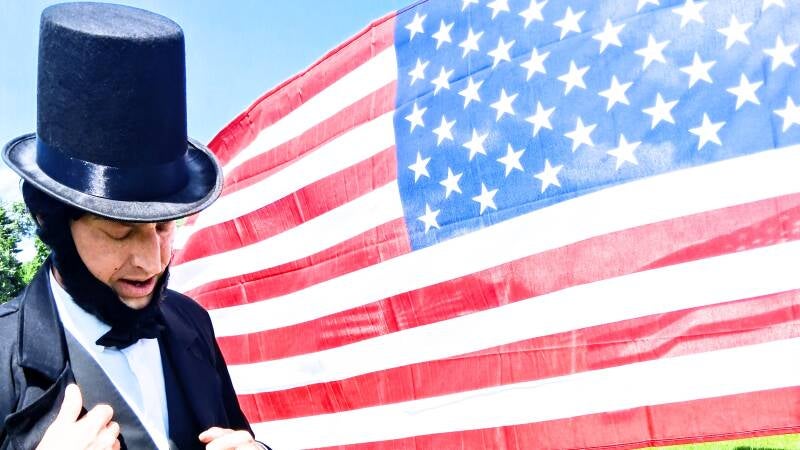
Contact Bruce "The Penny Lincoln" at:
630.624.9600
brucebotterweck@gmail.com
Create Your Own Website With Webador